
Painting the Vibe: How to Make an Accordion-Style Mood Book


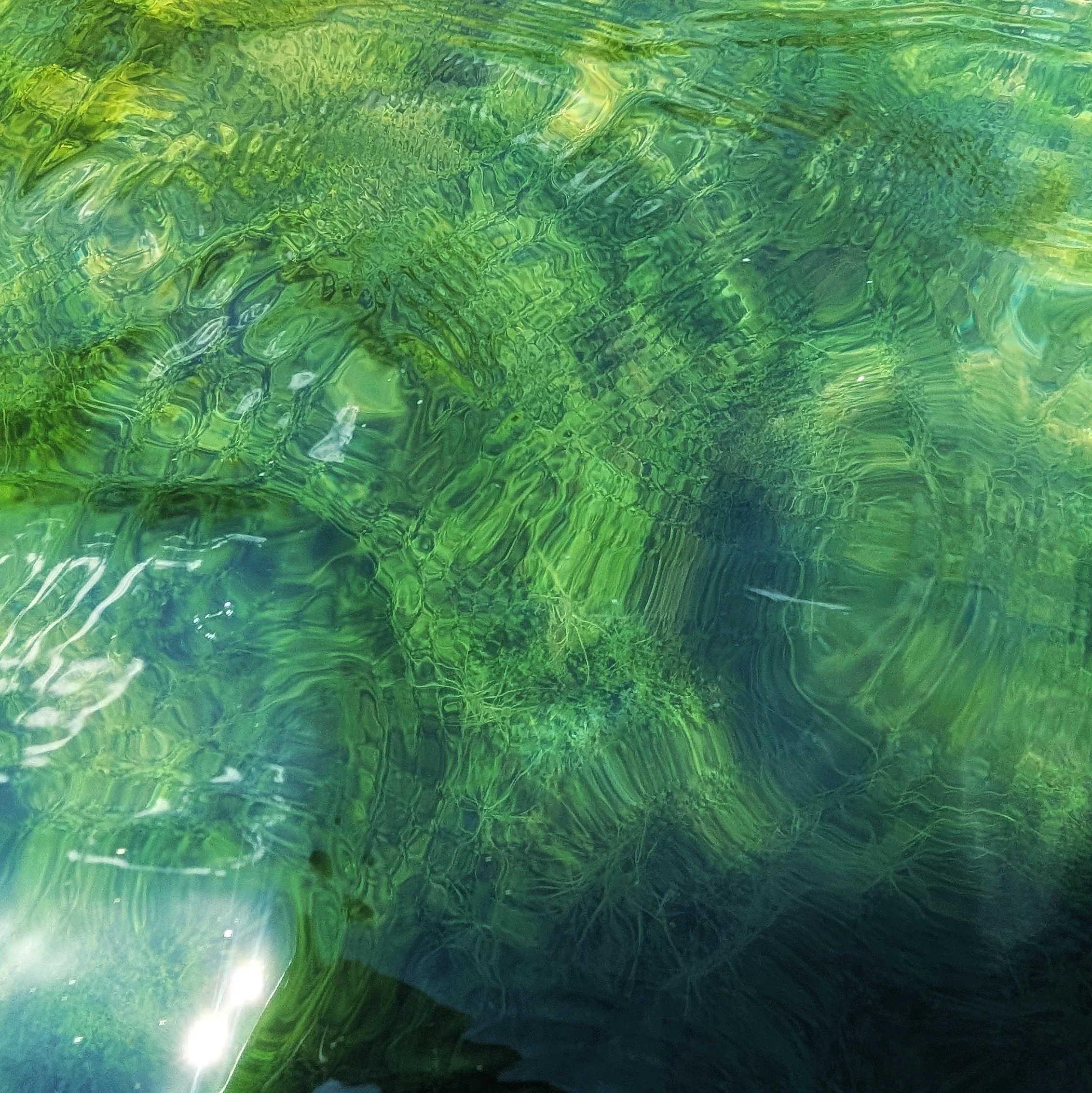
Photos above: Snapshots of water textures and colors from a recent lake paddle. They reflect sun, sky, trees, and a whole mood.
The other evening, as I chopped vegetables for dinner, Fleetwood Mac’s song “Dreams” started streaming through the kitchen speakers. There’s something about that lonesome melody that always stops me in my tracks. Wherever I’m at, I instantly smell phantom lake water and feel a sense of fading daylight accompanied by the cool of an incoming summer night.
I tried to relay this to my husband much less succinctly and in the process waylaid dinner by twenty minutes. In true nostalgic fashion, the words escaped me, and I was left with only a vague amalgamation of fragmented memories to share—unsuccessfully. In fact, I later realized it wasn’t a memory I was trying to describe. It was a mood.
And that little mood followed me around into the evening as I watched my true crime shows, all the way into the next morning as I poured my first cup of coffee. Clearly it wanted something: to be painted. It was then that I decided to make a mood book and document the process so you can, too!
WHAT IS A MOOD BOOK?
If you’ve never heard of a mood book before, it’s because I made it up. Actually, it’s just like a mood board except instead of digitally pinning things on Pinterest, you are manifesting the whole thing at your fingertips. Exciting, eh?
And while I am all about creating a mood board on Pinterest for quick visual inspiration, I enjoy the process of making a mood book because you are capturing the vibe in a real, tangible way. It can be a practice run for a specific piece of artwork or just a cool/fun/therapeutic way to process and preserve the ephemeral. Either way, the engineering is pretty straightforward, and it has loads of possibilities.
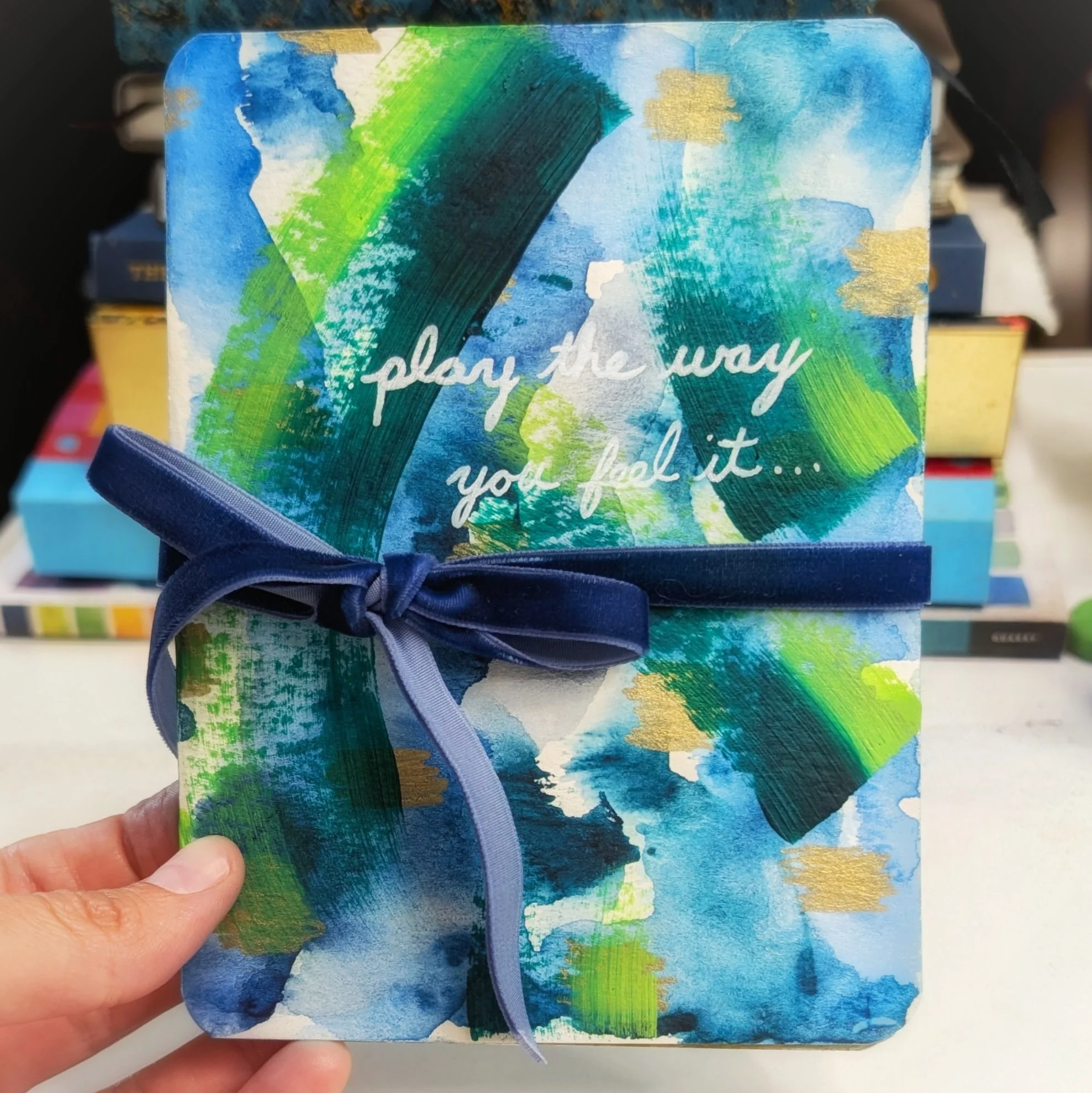
The little mood incarnate.
STRUCTURE
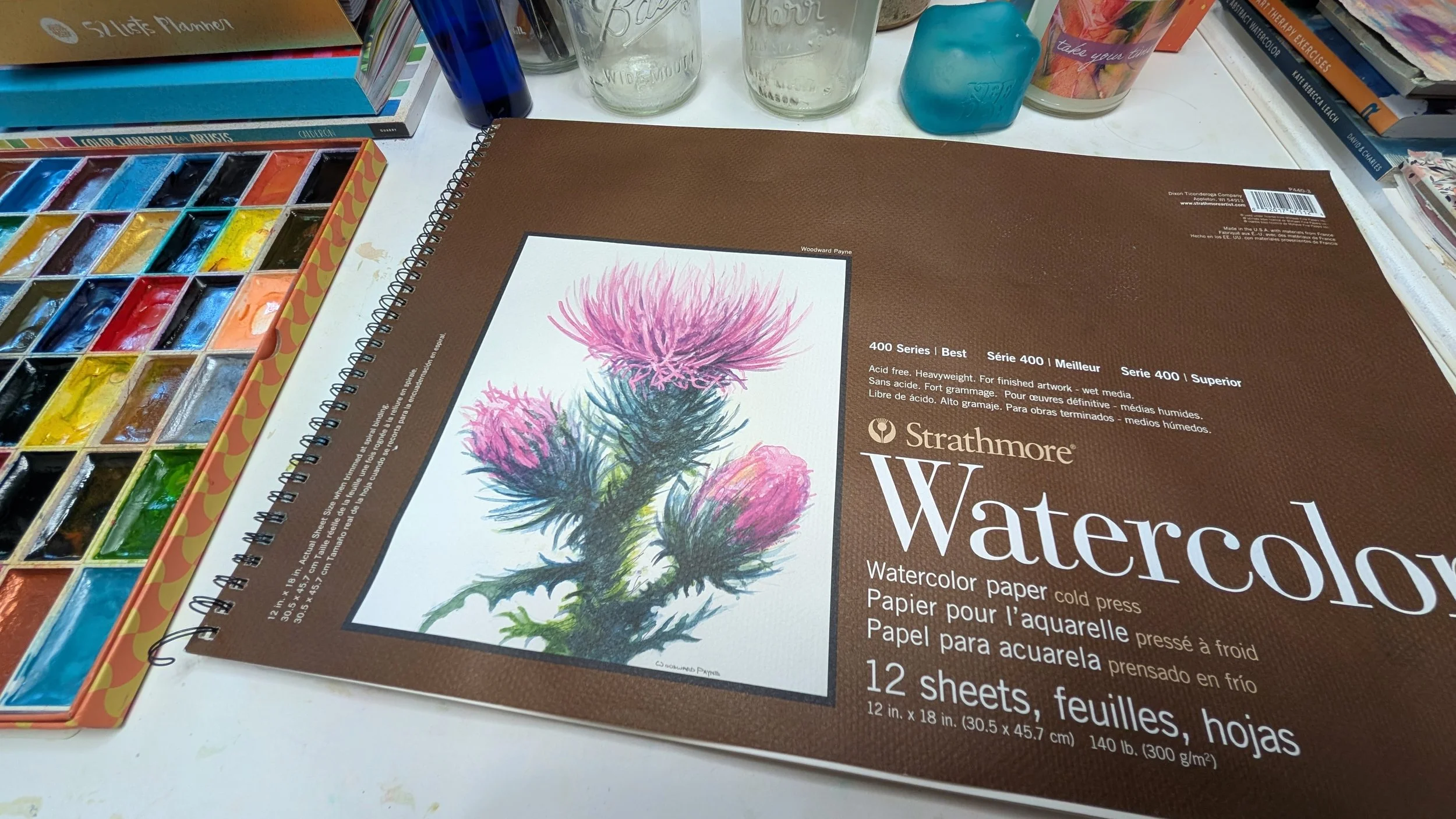
For the structure you’ll want whatever kind of paper works best with the mediums you plan to use. I chose watercolor paper for my mood book. While watercolor wasn’t the only medium I used, it is the most particular in regard to the type of paper it works well with. So, that was the determining factor for me. I went with 140 lb. cold press watercolor paper from Strathmore—great brand!
Today’s mood book is a simple, 4-panel accordion style:
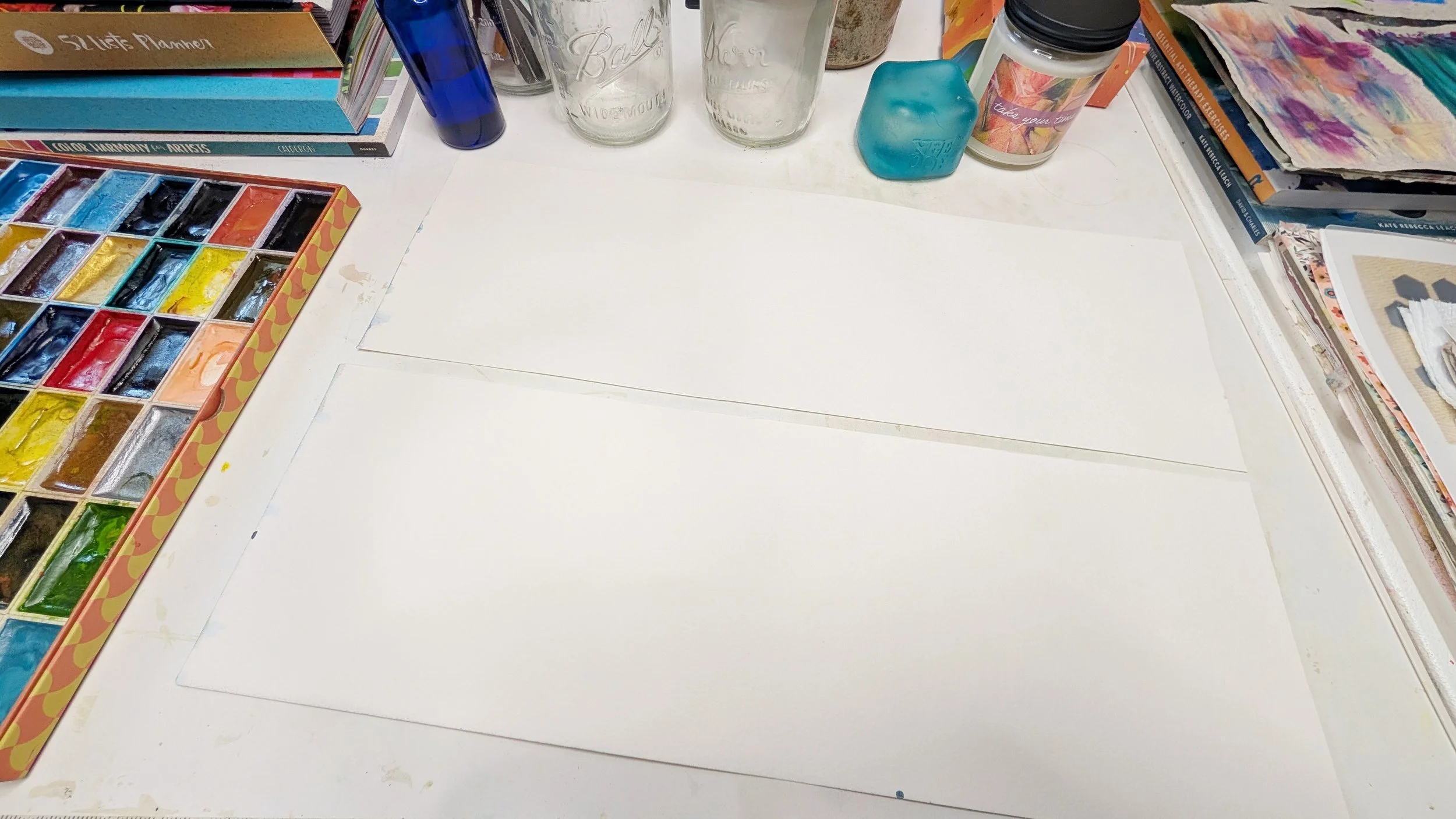
The Starting Size: My paper was 12 inches x 18 inches.
The Cut: I cut it in half lengthwise so I would get smaller, portrait-sized panels after folding.
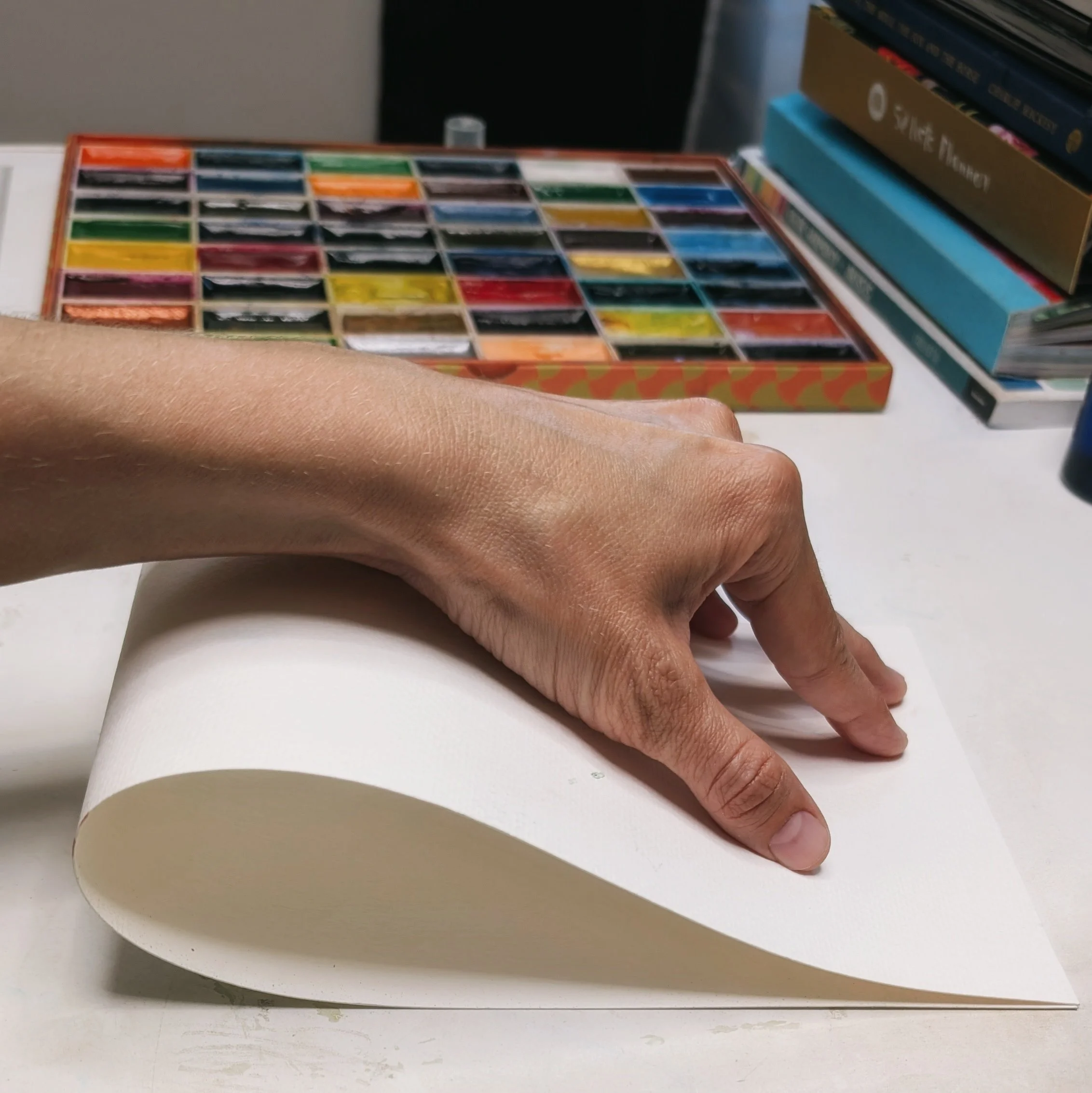
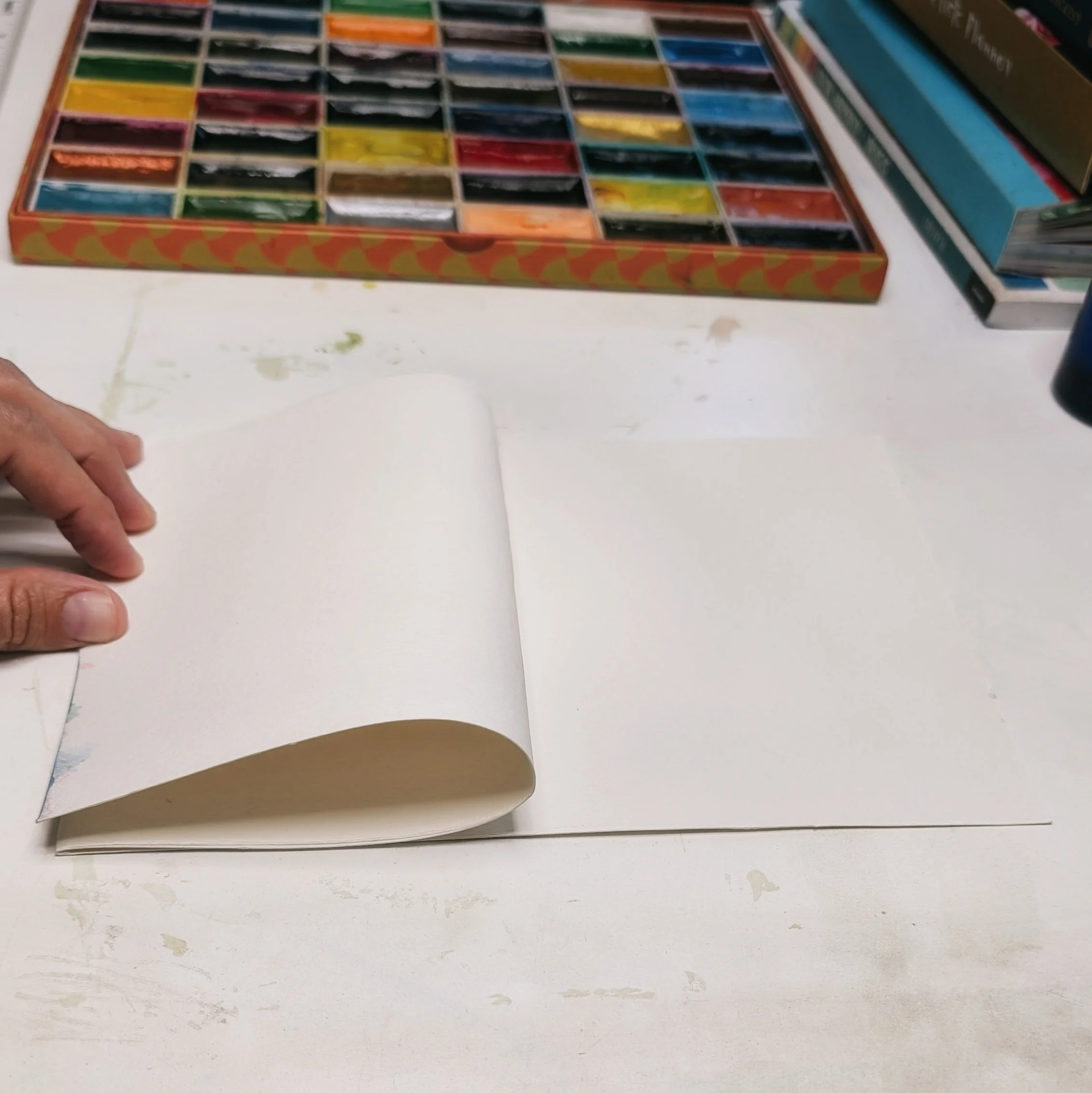
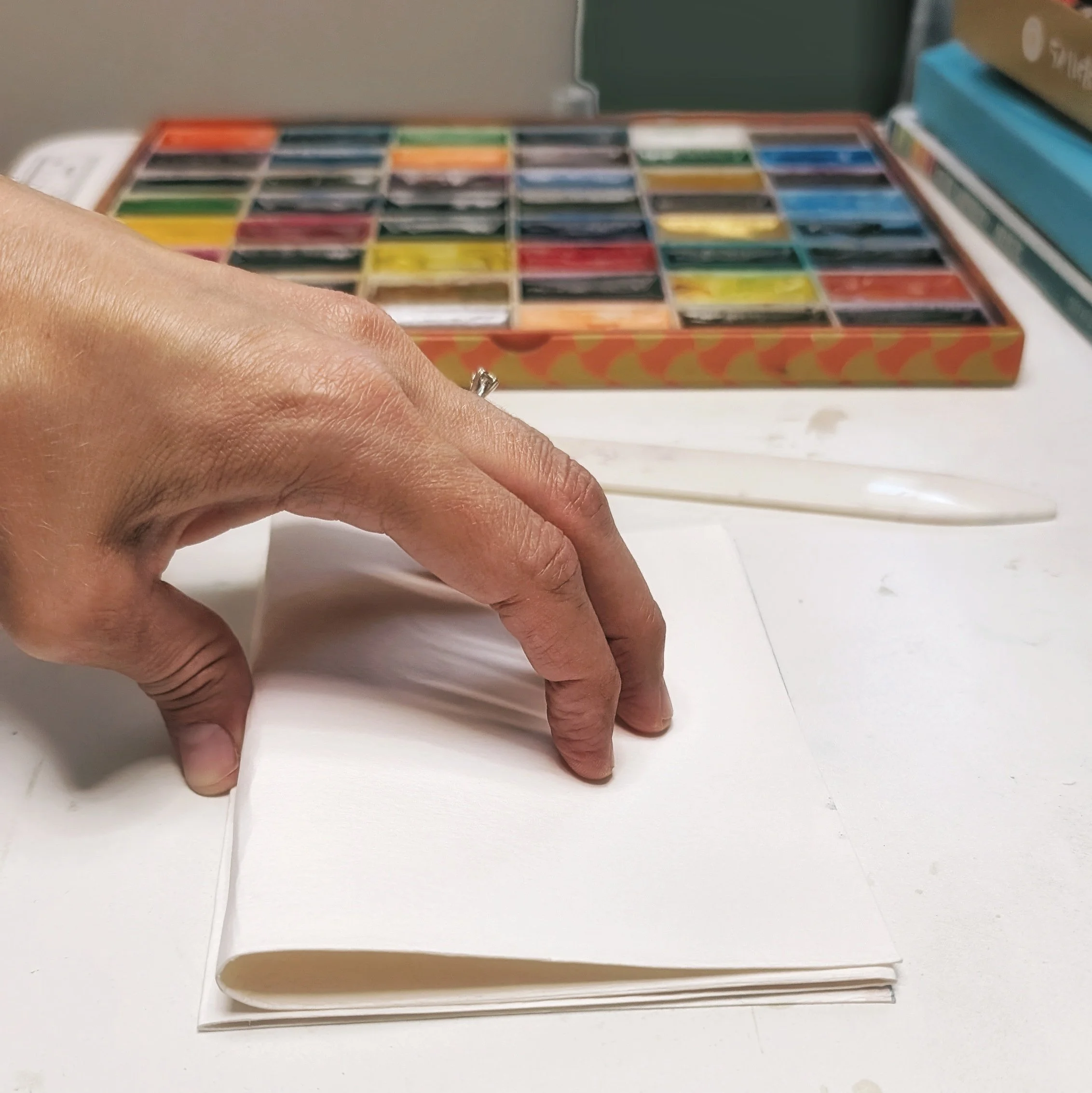
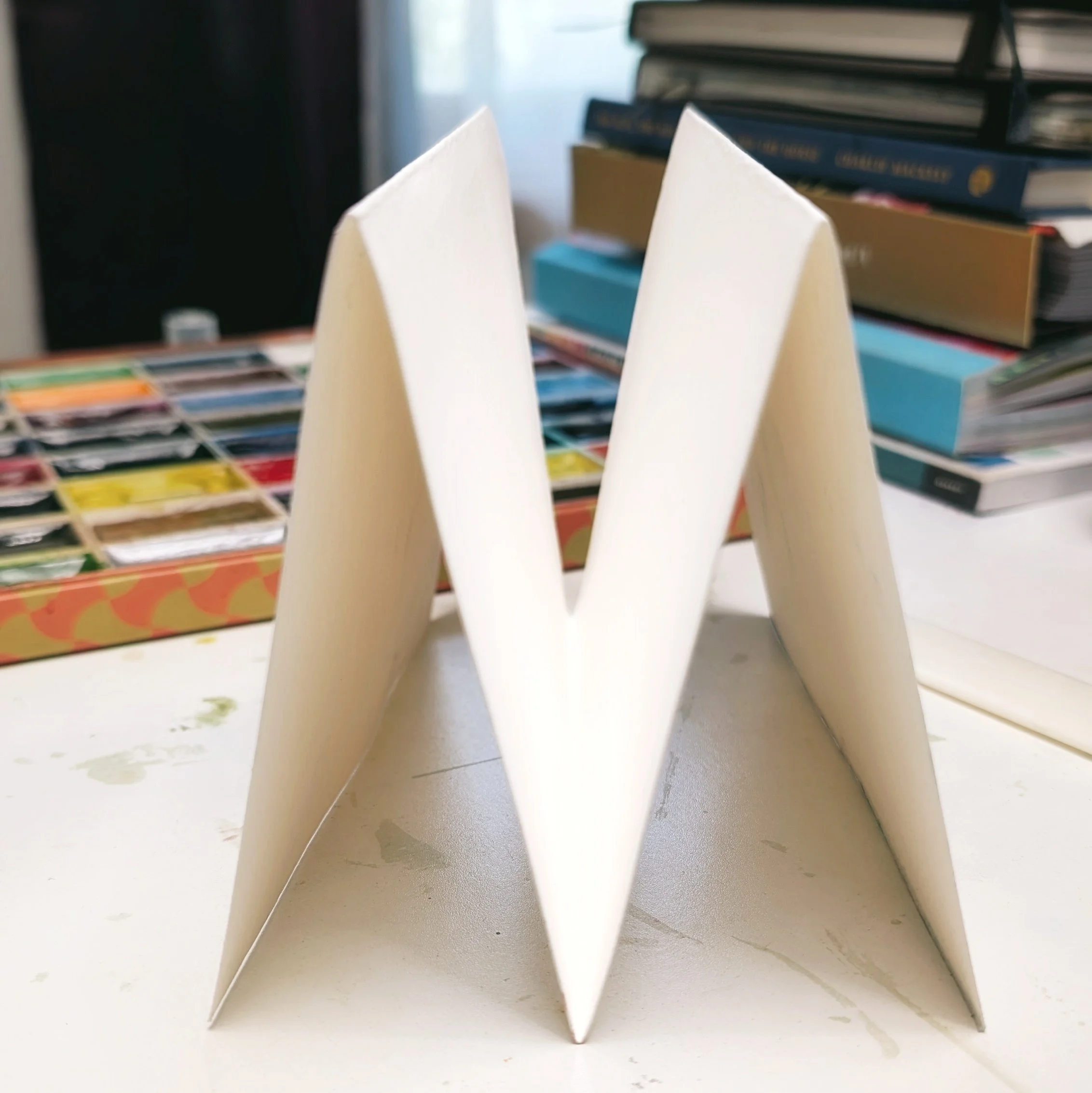
The Fold: To create the accordion, I simply folded it in half short edge to short edge, like a book. Then, I folded the outer edge of each flap back toward the outer spine.
The result is an “M” or “W” shape. And that’s all there is to it!
MEDIUMS
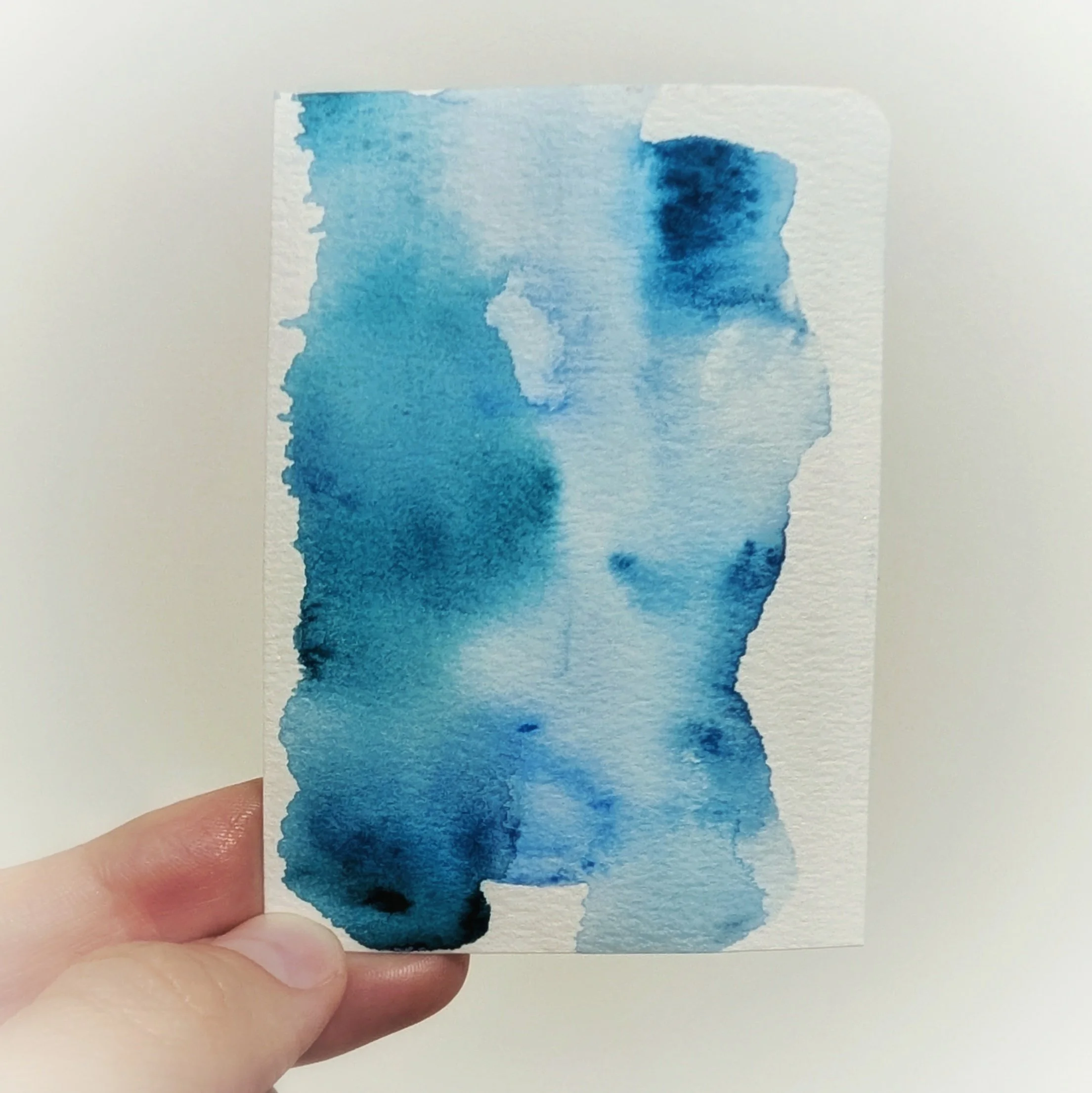
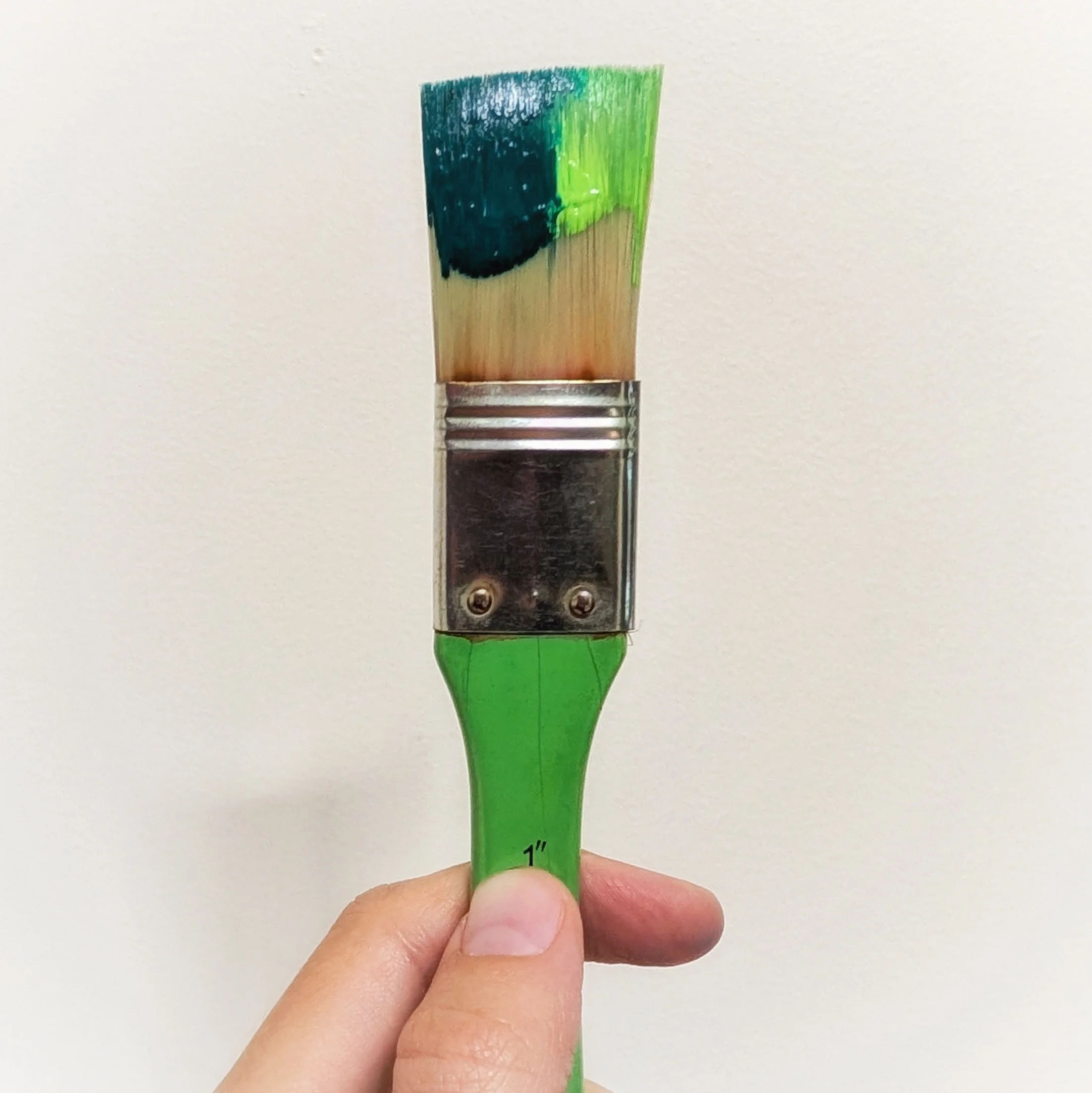
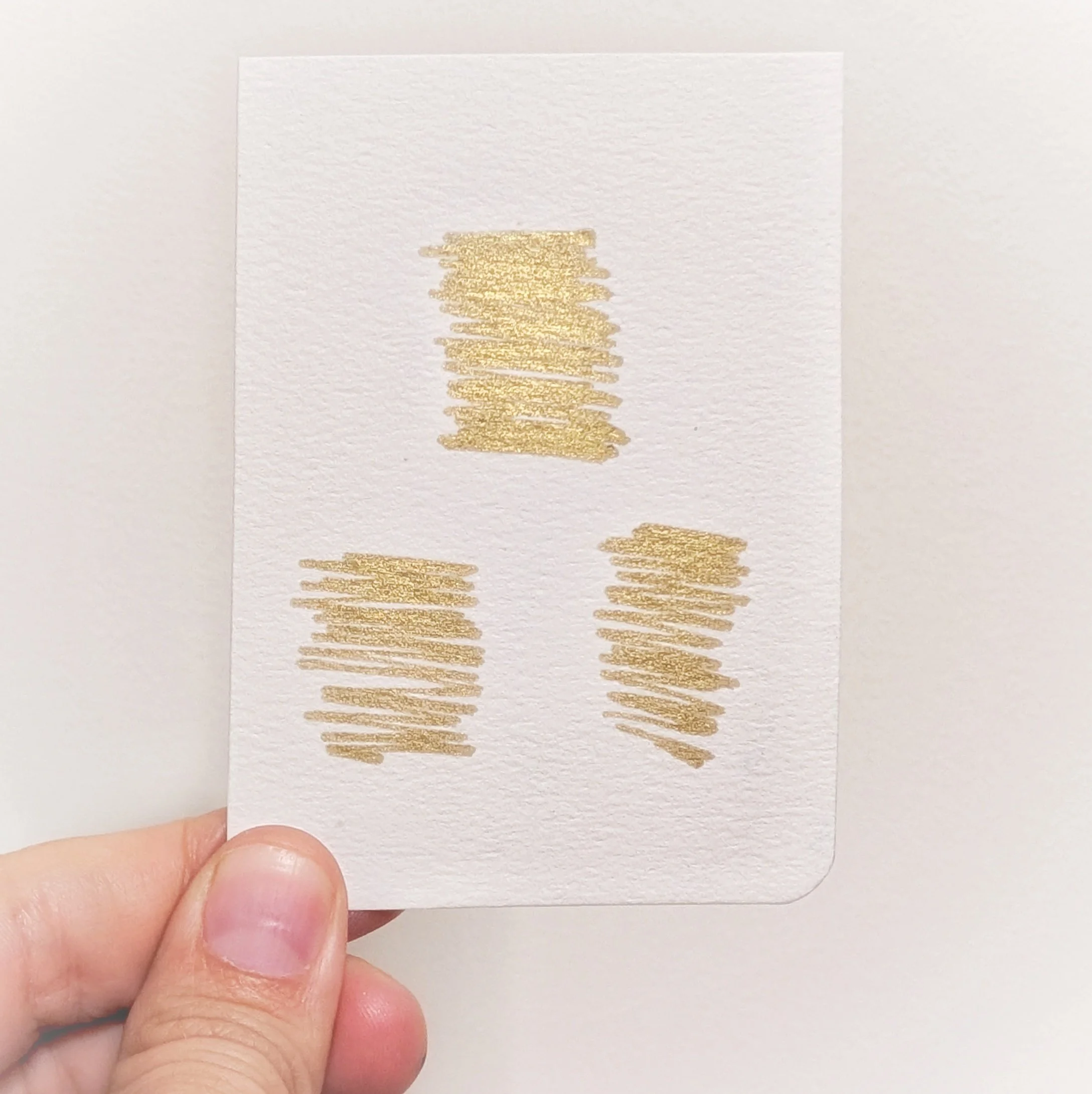
Once you’ve got the structure set, it’s time to choose your mediums! Of course you can use anything you want for your book, but remember it is a mood book: choose accordingly.
For example, I wanted to evoke a cool, lush, silky smooth feel with warm glints and watery depths. So, I reached for my watercolors, acrylic paints, and gold, oil-based pens. Think about which mediums would best capture the vibe you’re trying to bring to life.
Also, since it is an accordion style book think about how those mediums will cooperate (or not) when pressed together. You don’t need to exclude those mediums necessarily, but consider how you would preserve them if folded up. I’m looking at you, oil pastels!
LAYOUT
With mediums at the ready, it’s time to create your layout. To give the accordion book a capsule feel, I chose to paint the backside of the panels as one cohesive abstract painting with the main colors and mediums I planned to use on the inside panels.
Then, for the inside panels, I created individual paintings that teased out different facets of the mood I was exploring. I also masked off a border for each inside panel with washi tape (and ultimately filled them with gold) to create a cohesive yet self-contained effect.
That layout is one of many options though. Alternatively, you could utilize both sides for individual pieces or create a narrative, panel by panel. You could also create collages and pop-outs. Whatever serves to set the mood!
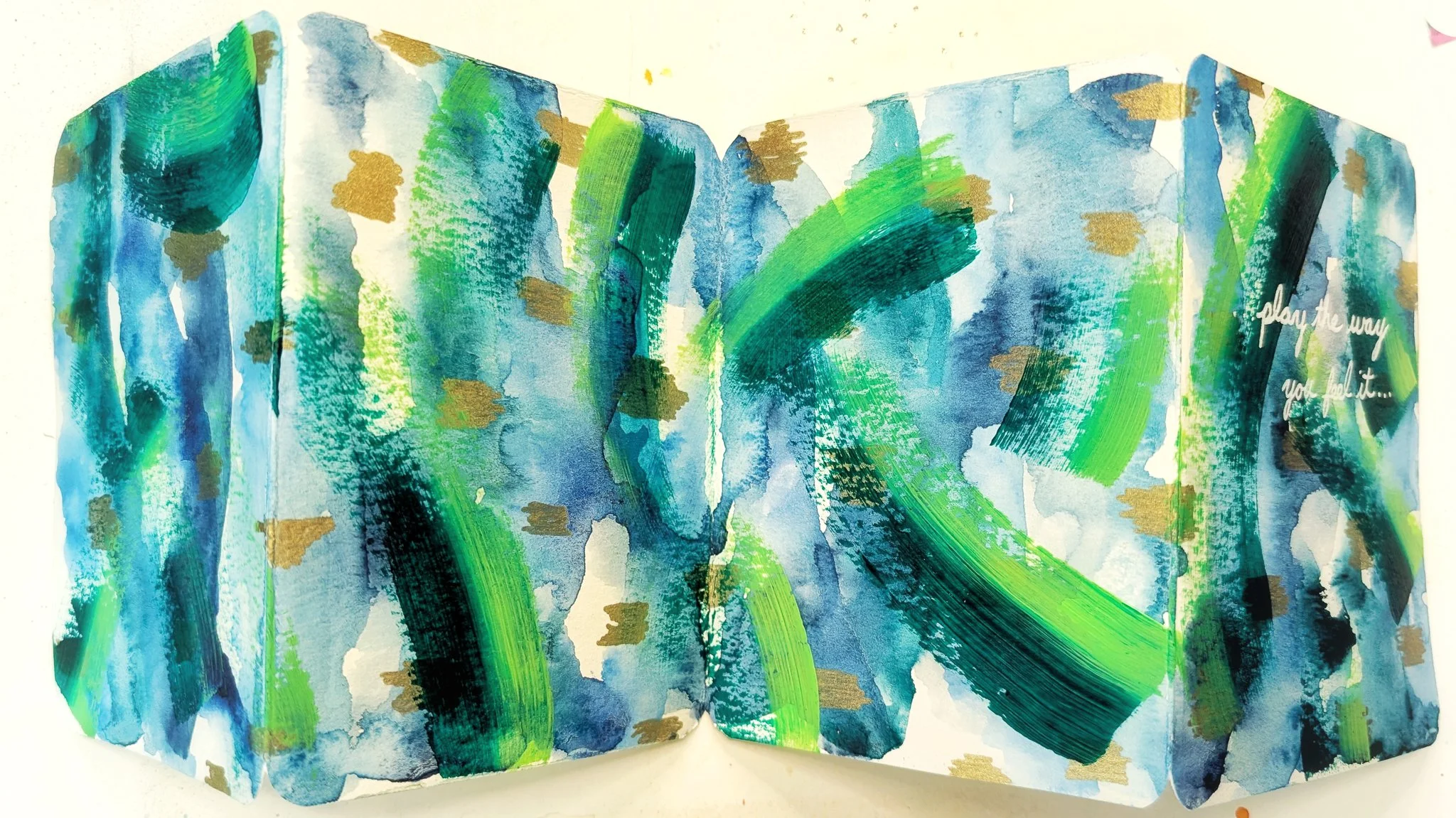
Backside panel shot: Hints and glints of a watery world.
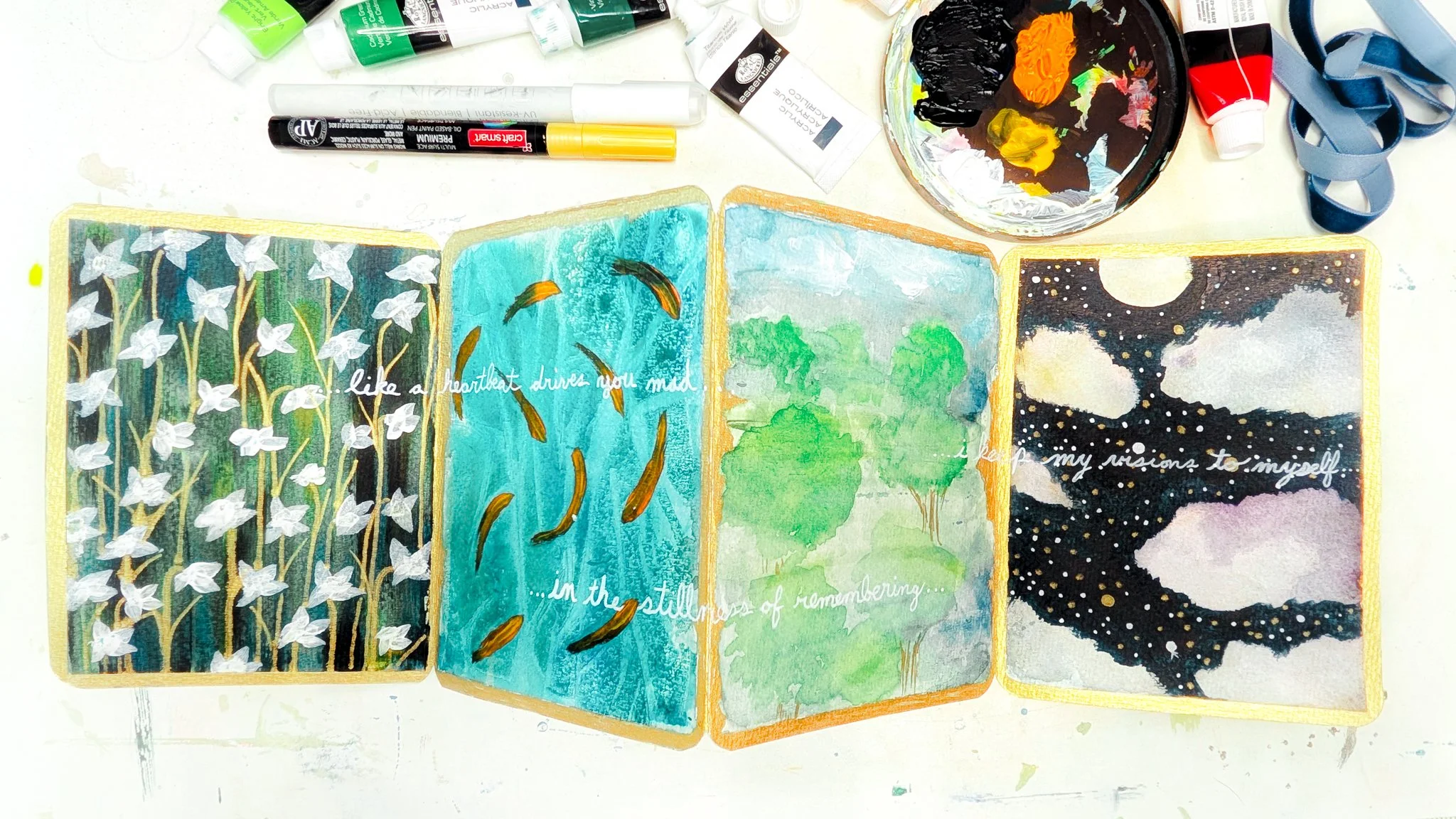
Inside panel shot: Lush, magical, and mysterious scenes that make up the mood…
FINISHING TOUCHES
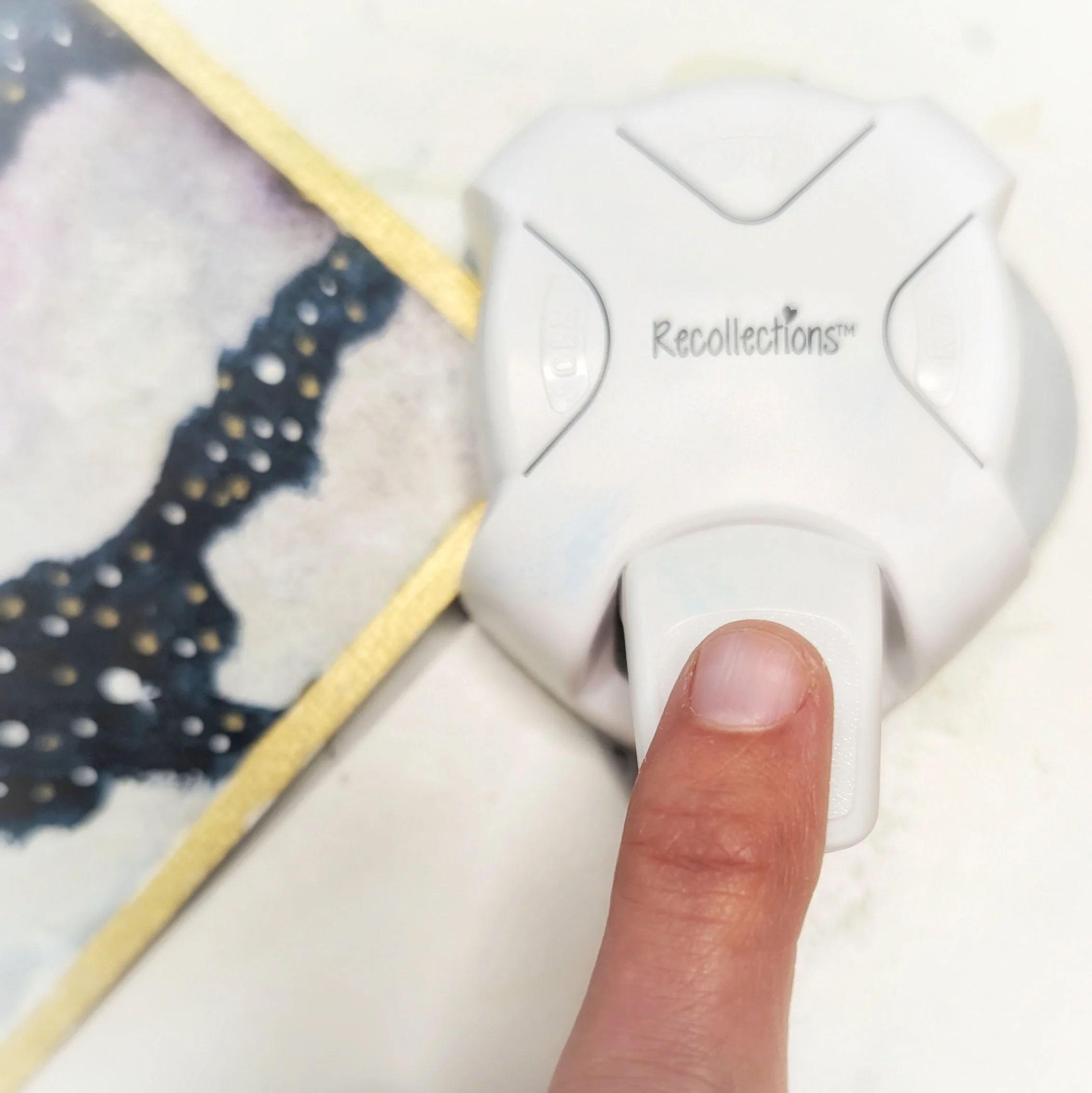
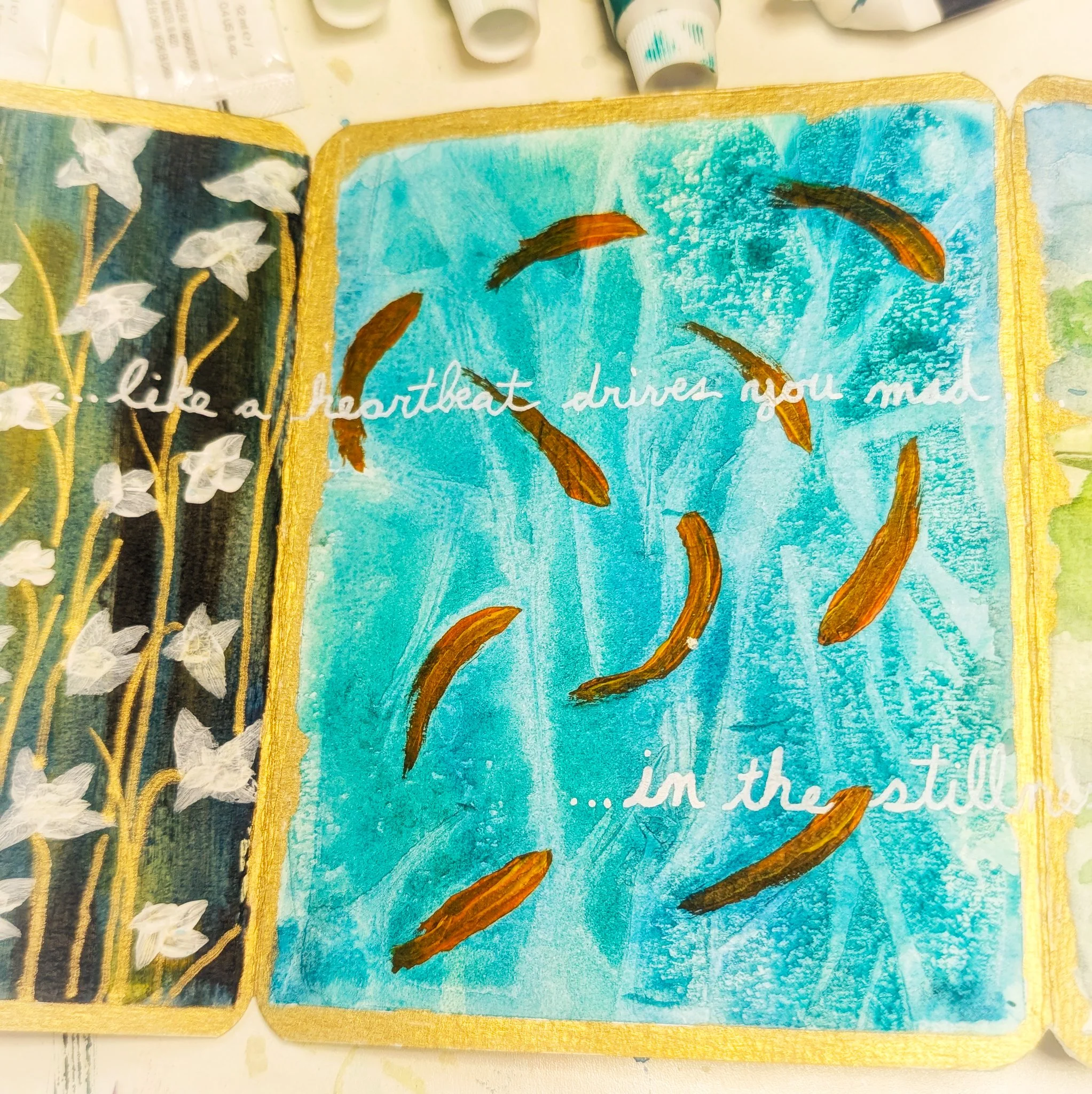
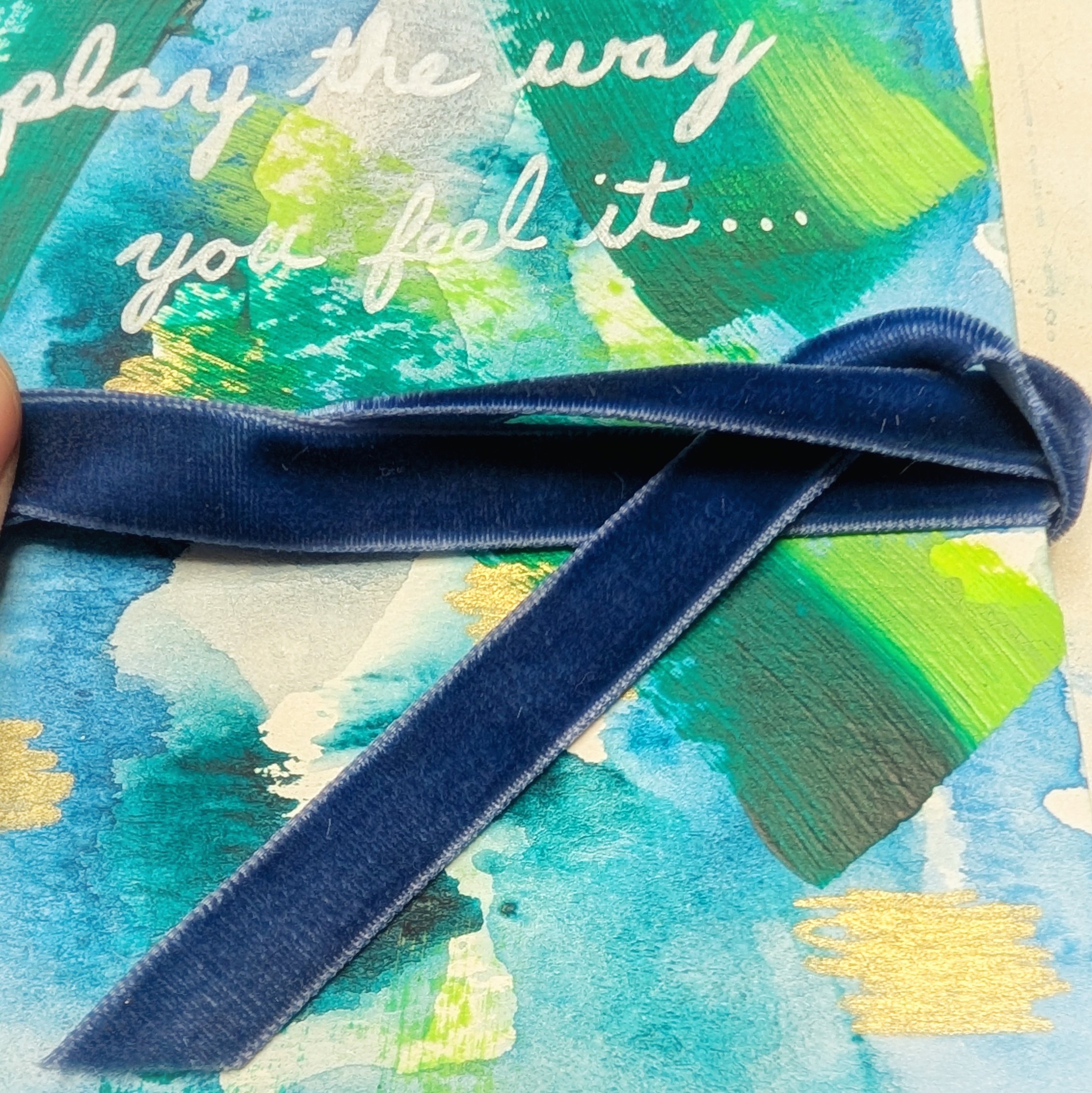
To really elevate your mood book, take time to add finishing touches. I decided to round off the corners as well as scrawl out my favorite song lyrics from “Dreams” to really anchor the feeling. And, I tied it all together with a velvety ribbon.
The key is to think about which small details are going to amplify the feeling you’re cultivating. You could even create a pocket panel (how to video here) for holding meaningful bits of ephemera to ground the mood in an experience.
SAFEKEEPING
Once you’ve finished your mood book, find a special place to display or stash it. I found a basic photo box for mine with plenty of room for more mood books. I can take one out and flip through it whenever the urge strikes.
Whether for a hit of nostalgia or brainstorming for another creative project, your mood book can be a beautiful touchstone to the past and inspiration for the future.
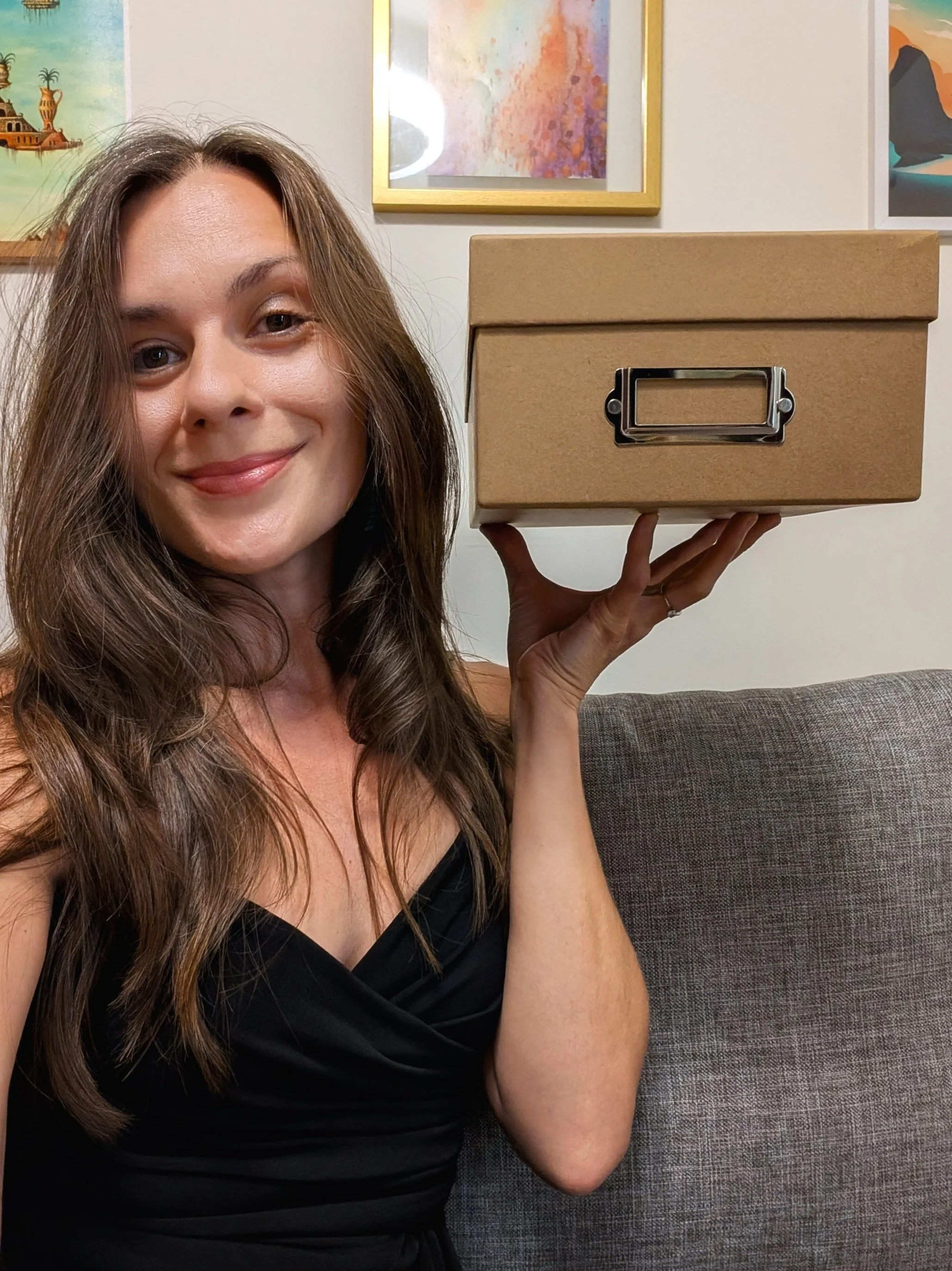
Exhibit A: A basic Michaels photo box. There’s plenty of room to art up the outside of this too, but that’s a post for another day! ;)
What about you? Is there a specific song that puts you in a mood, and what does it look like? Drop a comment below!