
Silent Passengers: A Guide to Mapping Your Artistic Influences
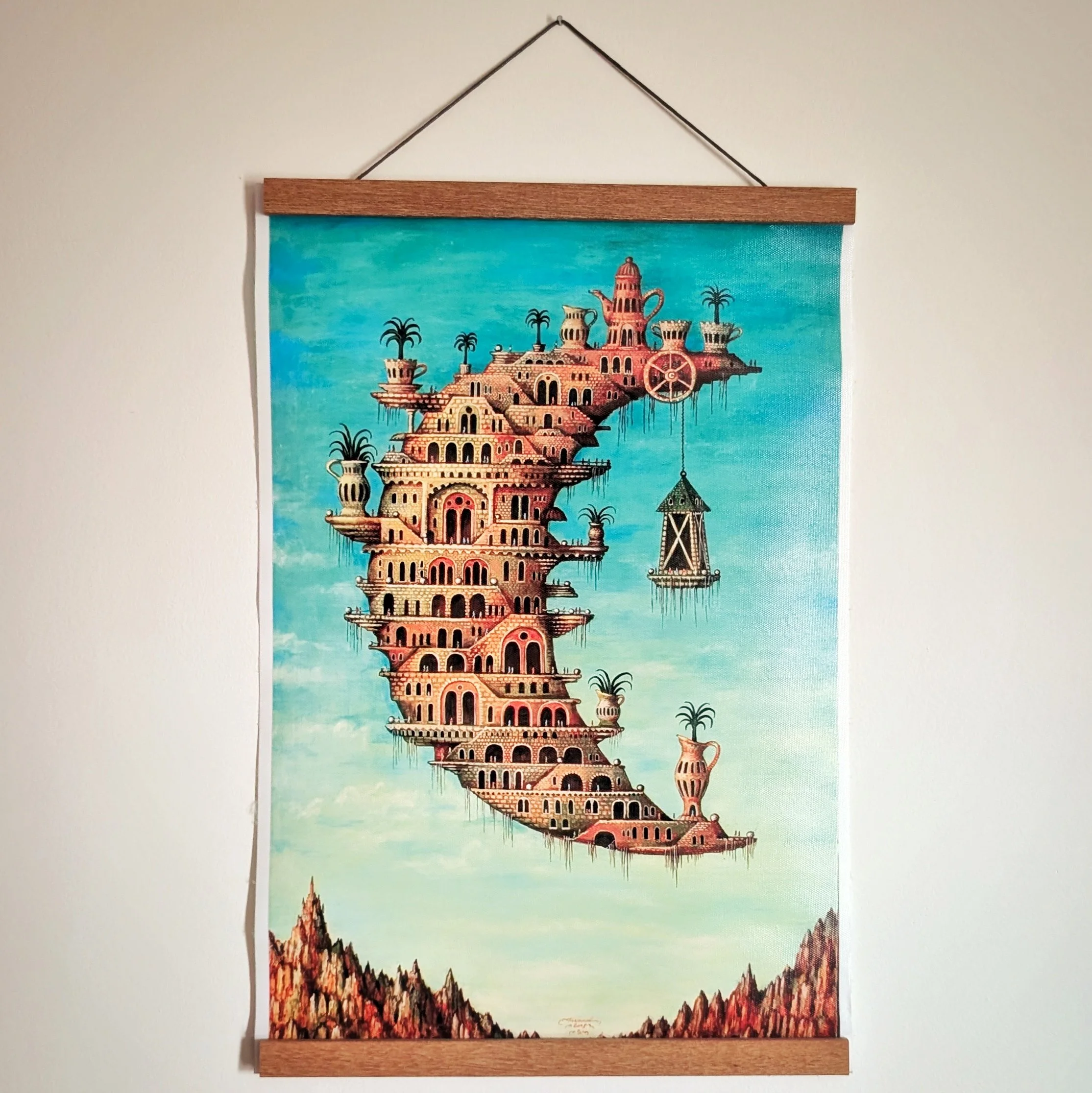
I chose this piece by Salvador Dalí for my studio because it packs a personally influential punch—a surreal dreamlike world, whimsy, and mystery.
Dalí, Salvador. Living on the Moon. c. 1978. Photograph of a canvas print in the author’s studio, May 2026.
Years ago, I took an online course about finding your artistic style. It was a good class, though I’ve forgotten the name, instructor, and most of the content—except a really great exercise that I plan to pass along today.
It was essentially a mapping of artistic influences as far back as you could remember. What I’m sharing today is a streamlined version of it. The purpose is mainly an exercise in self-awareness. What and who really influence you? Which ghosts from artists’ past sit on your shoulder and haunt your studio? Knowing that can help you discover what truly resonates in order to hone and evolve your style. So, are you ready to find out?
THE ASSIGNMENT
Before we begin, I think it’s important to note that you shouldn’t force it. And by it I mean resonance. Speaking from my own experience, I know how tricky it can be to distinguish between a style you deeply appreciate and one that is actually part of you. For example, I love Dutch art from the Baroque period. I love Vermeer. I think it’s the dramatic light values I appreciate most. There’s something about the way the stark contrast overlays the richness of the subjects themselves that always draws my eye. However, that’s only something that strikes me when I encounter one of those paintings. I don’t carry those images around in my mind like the other pieces I’m going to share with you today. When it comes to mapping artistic influences, turn to those silent passengers that have been by your side trying to help you navigate all along. Now, hop in. Let’s go for a ride!

A painting that I deeply admire from afar, but not one that haunts my studio.
Vermeer, Johannes. Girl with a Pearl Earring. c. 1665, Mauritshuis, The Hague. Wikipedia, link.
SOURCE MATERIAL
Childhood
When I said we were going back, I meant waaaay back. Childhood. Now, I don’t know about you but I wasn’t exactly roaming Smithsonian art galleries at age four and analyzing the post-modern dilemma. No, I was watching TV in my pajamas and flipping through the pages of my bedtime stories.
The first artwork that really dug itself in deep was the opening to PBS’s Mystery! It was an animated opening. The iconic and macabre stylings of Edward Gorey to be exact. Of course, at the time, I had no idea who that artist was. All I knew was that I loved the subtle splashes of color, the inky black lines, wonky angles, and overall implication of hidden things. My curiosity ran wild. I wished that the cartoons had been the show, not the live action story with real actors. I would only ever stay for the opening credits, and they’ve stayed with me my entire life.
So, when searching your childhood memory bank for images, think back to what you were doing as a kid. Try to remember cartoons, movies, or stories you were drawn to. Now, with your adult mind, write down what you enjoyed about them. And, if you can, write down the artist.
Above: The most iconic show opening of all time in my humble opinion.
Video:Mystery! Opening Sequence (2004 version)
Art by: Edward Gorey
Animation by: Derek Lamb, Eugene Federenko, and Janet Perlman
Original Score by: Normand Roger
Source:PBS Masterpiece
Teens
Next stop, adolescence! Don’t worry, we’re side-stepping the awkward bits and going to the good parts, like Psychology 101! Well, that was the best part for me anyway. Mostly, it was because we got to study a whole section on dreams which included surrealist art.
I still vividly remember sitting in the back of the class as I casually flipped through the text book, my teacher’s lecture buzzing in my ear. And there it was—Salvador Dalí’s The Enigma of William Tell. It was one of those paintings that was a little jarring and strange but captivating in a really weird way. I became fascinated with Dalí’s pervasive dream world and subconscious symbologies from that point on. To this day I have a print of his painting Living on the Moon hanging in my studio.
Adolescence is a time of exploration and discovery. Think back to illustrations in your text books, novel covers, album art, posters in your bedroom, murals in the park, doodles in the margins of your notebooks—what were they? Those formative years are a treasure trove of influential roots.
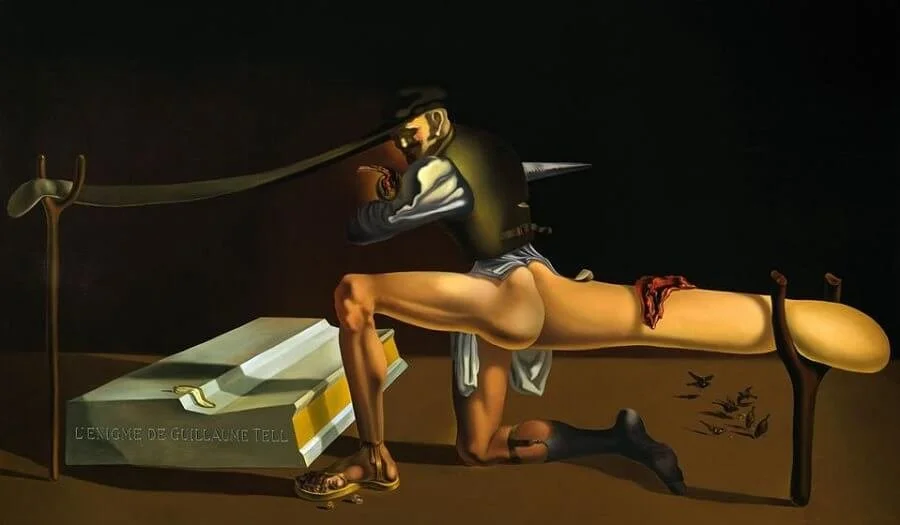
This image is loaded with Dalí’s own rebellious personal and political symbology which would take another blog post to unpack. But for me at the time, it was an aha! moment in realizing that it wasn’t the atmosphere but the distortion of it that made the painting dreamlike.
Dalí, Salvador. The Enigma of William Tell. 1933, Moderna Museet, Stockholm. Salvador Dalí Paintings, Bio, Quotes, and Art, link.
Early Adulthood
While childhood and adolescent influences usually come by things you’re exposed to, early adulthood is where influence starts to be cultivated. Once you develop a taste for what you’re drawn to, it has a funny way of weaving its way into your world. Early adulthood had me wandering the campus of a state college. I was a declared English major because I liked to read, but really it was because I had no idea what I wanted to do and college seemed to be a convenient way to stall for time and money (while I spent thousands in student loans).
Anyway, of all the classes I took, it wasn’t a literature class that I remembered most—it was an art appreciation class. It was an elective, part of the general requirements. Held auditorium style in a lecture hall, I’d show up, steaming black coffee in hand, ready to nestle into my seat and absorb everything my very astute professor had to show and tell us. I always brought a notebook, but I didn’t need it because the material was so enthralling I just remembered it.
What I did note was how I could never really get Gustav Klimt’s The Kiss or Pablo Picasso’s Guernica out of my mind. They were sticky for some reason, and not only because of their surreal vibes. I was also returning to the sentiments and histories that created them. So for early adulthood influences, pause to remember not just to the visuals that caught your eye, but the ideas behind them. Take a minute to explore the ‘why’ behind the ‘what’.
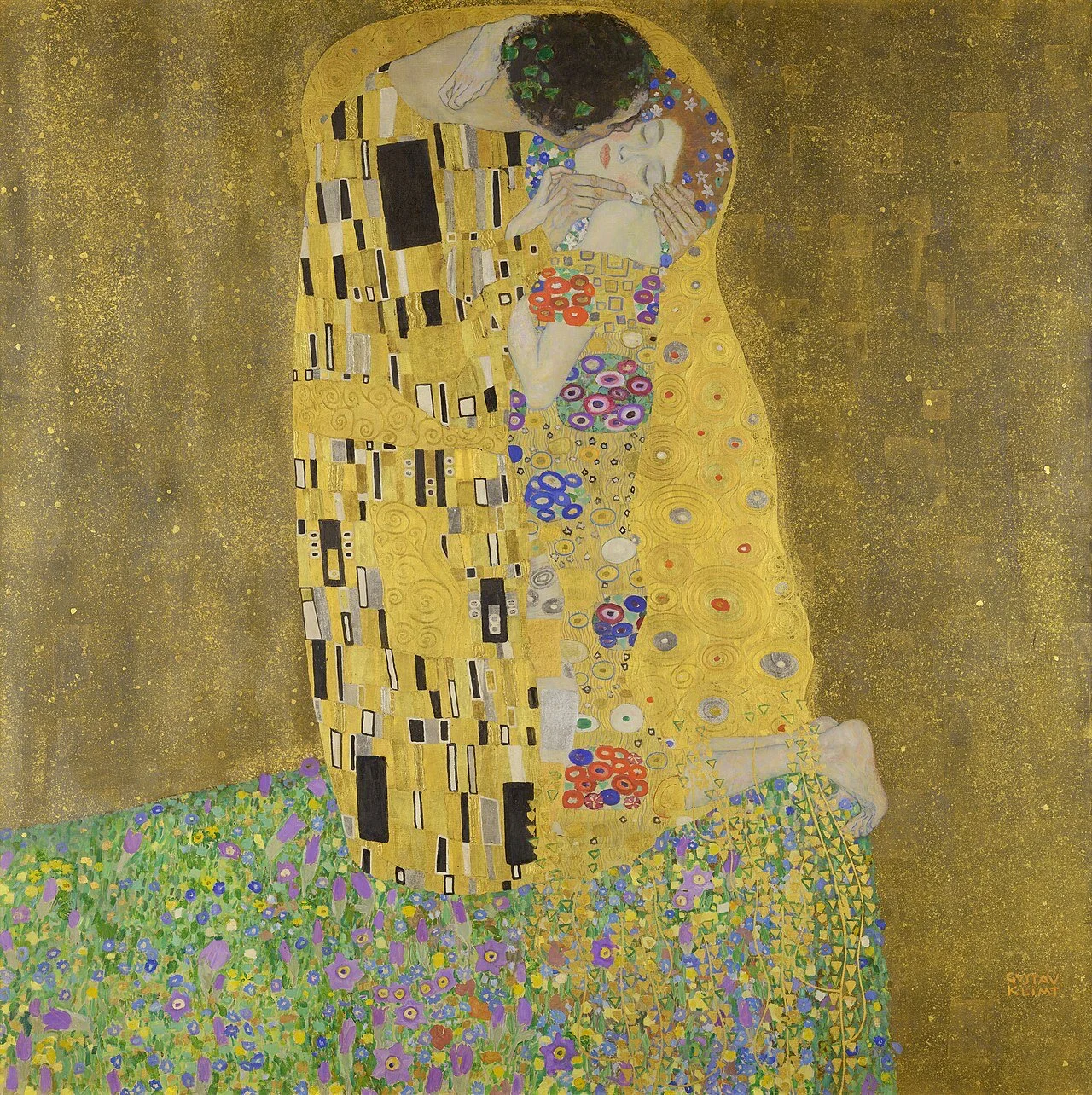
Amidst the ornate splendor of Klimt’s gold leaf, it’s the woman’s absolute, though tenuous, peace in her lover’s arms that strikes me most.
Klimt, Gustav. The Kiss. 1907–1908, Österreichische Galerie Belvedere, Vienna. Wikimedia Commons, link.
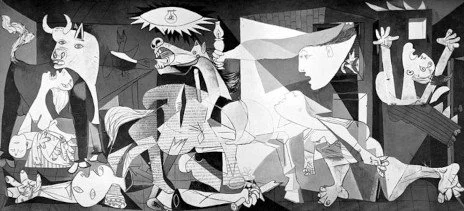
Disturbing and necessary. My initial encounter with Guernica was the first time I truly understood how essential and powerful art can be in establishing a truthful collective narrative and resilience.
Picasso, Pablo. Guernica. 1937, Museo Reina Sofía, Madrid. Wikipedia, link.
Today
And that brings us to present day—the now. Here we shift from the influences we’ve cultivated in our everyday lives to those we consistently go out of our way to find. When left to my own devices as an adult, I do go out of my way to visit art museums. And while I like the idea of being so cultured that I just soak in everything equally, uh, that’s not the case. However, my sieve-like memory is actually an asset because it saves what matters to me.
A few years ago, I was sent to Washington, D.C. for a work conference—alone. With scads of time on my hands in the evenings, I took the opportunity to wander through the Smithsonian American Art Museum. The exhibits are amazing in quality and overwhelming in volume. I have mostly forgotten what I saw there, to be honest (again, sieve-like memory). But one piece I do remember is John LaFarge’s stained-glass Peacocks and Peonies II. I have always loved stained glass. Maybe it’s my Catholic upbringing or the beauty to be found in framing brokenness as an exquisite puzzle rather than a problem. I don’t know. All I know is that I snapped the photo below and still take it out every so often to appreciate this gorgeous piece of work. It’s like a little curiosity I keep tucked away for a rainy day.
Identifying influences as an adult is about noting what you return to again and again in spite of all the other demands on your attention. Are there aesthetics or styles or artists that you make a point to seek out or deep dive into on a Sunday morning when you know very well you have a dozen other tasks you could be doing? That might point to your latest influence.
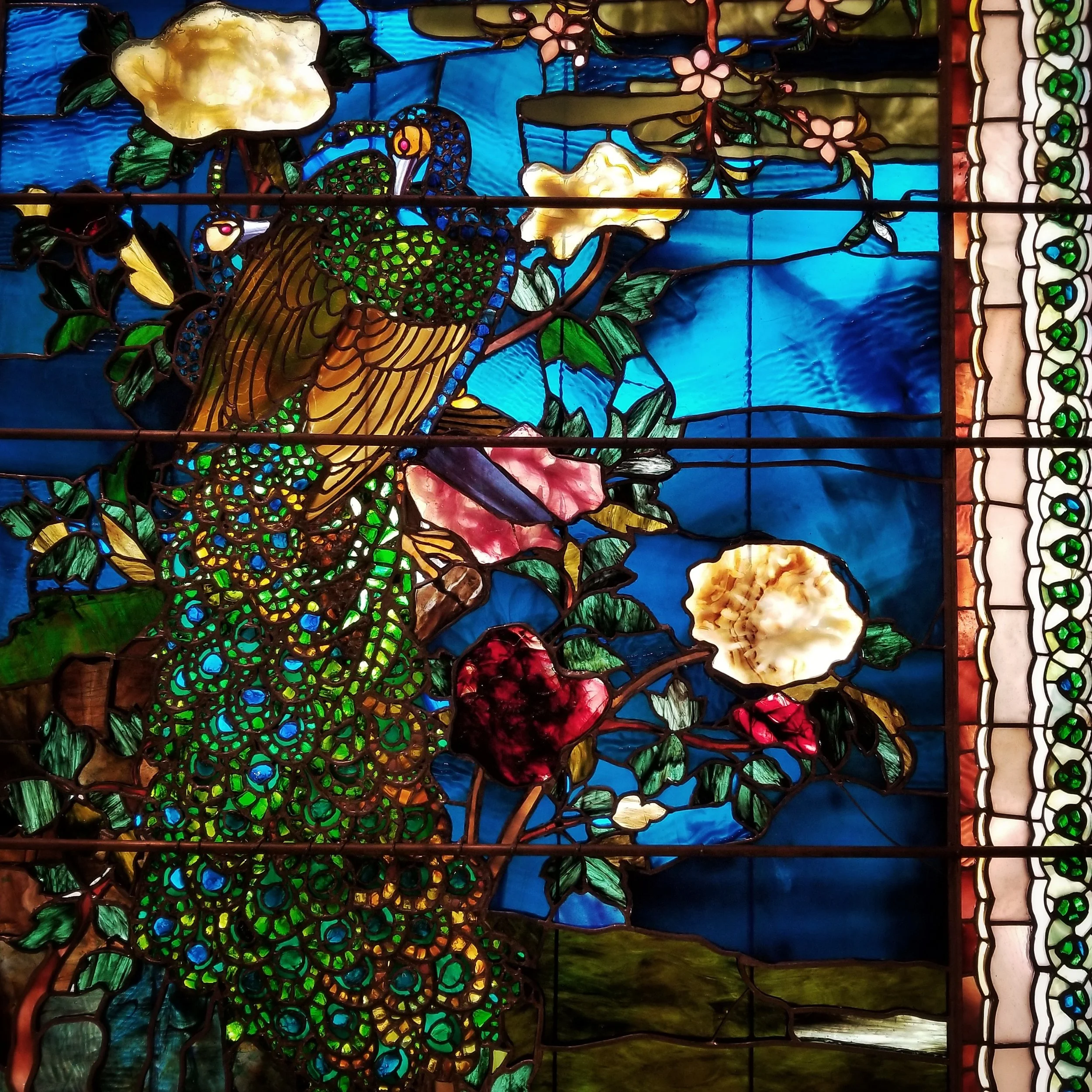
Simply stunning.
LaFarge, John. Peacocks and Peonies II. 1882, Smithsonian American Art Museum, Washington, D.C. Author’s personal photograph, Nov. 2022.
MAPPING
Once you’ve captured a few memories and names, it’s time to lay it all out. I turn to Pinterest for this. It’s a really quick way to gather your visuals into one spot. Alternatively, you could print your images and make a physical art board. Either way, the goal is to get everything in front of you.
After you’ve arranged your visuals, pinpoint a few key characteristics from each piece. Think color, texture, line work, contrast, mood, motif, medium. What stands out most? Note any recurring patterns across your different influences. This will show you what’s resonating most closely with you.
Now, the really fun part—turn your eye toward your own work to see if you can find those characteristics in your art. If so, where? If not, why? I think this is a really helpful reflection to start making art you truly want to create, because it comes from an honest place. It also highlights the barriers you may be unwittingly placing in your own path.
Personally, I had to come to terms with the fact that I don’t enjoy the creative process of realism even though I deeply respect and appreciate it. I prefer to create from the dark nooks and crannies of my strange little mind, and my work reflects that. See Exhibit A below.
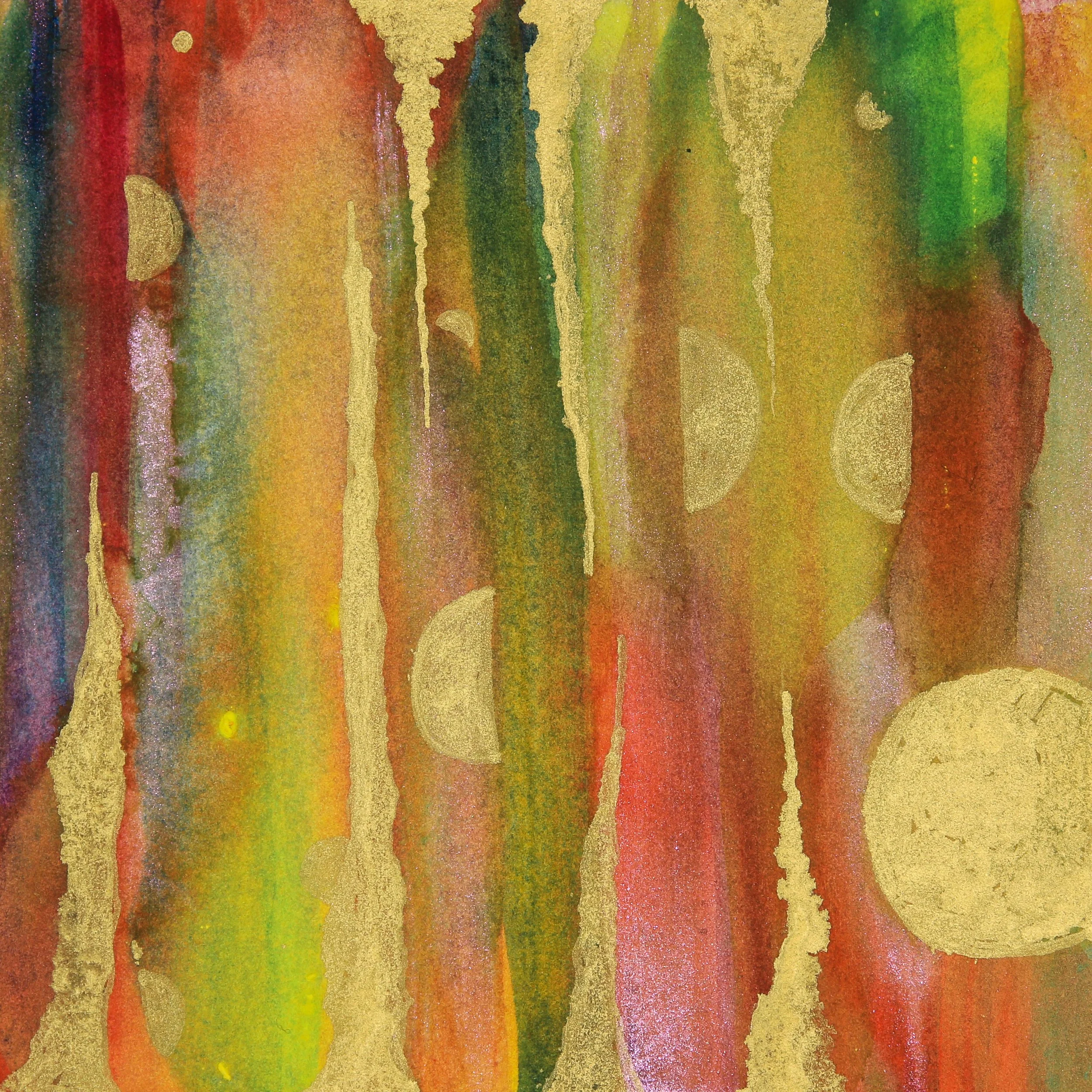
© 2026, Anna Volk. The Recesses. Mixed media on paper, 16 x 16 cm.
WHERE TO NOW?
Okay, so you’ve identified key influences and what’s resonating. Now where do you go from here? Anywhere you want! As I said in the beginning, this is an exercise in self-awareness. It’s not meant to put you in a stylistic box; it’s intended to help you recognize the type of art you find most fulfilling creatively and to let that help you navigate your next project. For example, on some projects the cranky angles of Edward Gorey help me lean into a more macabre feeling. And sometimes John LaFarge is riding along up front helping me put disparate pieces together. And Dalí, well, he’s always in the backseat making everything a little weird—in a good way.
So, who’s riding shotgun in your studio this week? Let me know in the comments! Have a nice trip!