
Powerful Medicine: Using Art to Heal the Body, Heart, and Mind
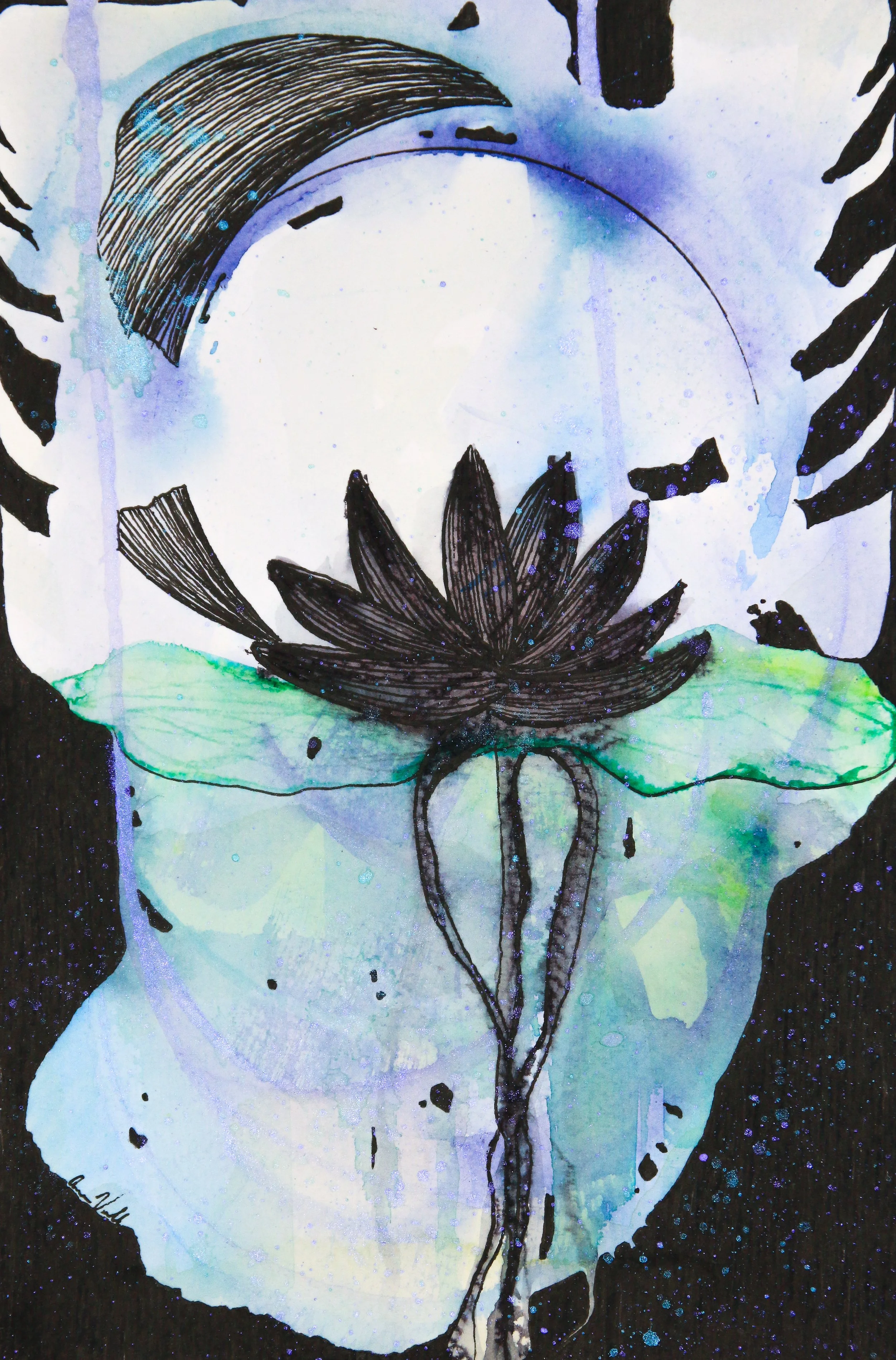
Soliloquy (Conversations series). 2025. Watercolor and ink on paper.
The American painter Edward Hopper once said, "If I could say it in words, there would be no reason to paint." Lately, I've been reflecting on this in relation to the deep pain we contend with as human beings. Every morning, our news feeds bring accounts of mass government corruption, sanctioned brutality, and the splintering of society one piece of identity at a time. And loss. So much loss—of integrity, safety, and life itself.
These happenings aren't just headlines; they're our lived experiences. While words try to tell the story, explaining what we live through can feel nearly impossible. It's times like these that I reach for art, an outlet that has always served as powerful medicine to resist the blows life has leveled at me, personally and collectively. While I'm not an art therapist, I have spent most my life exploring creativity as a tool for healing. So, today, I'd like to share this grassroots medicine with you to support your body, heart, and mind.
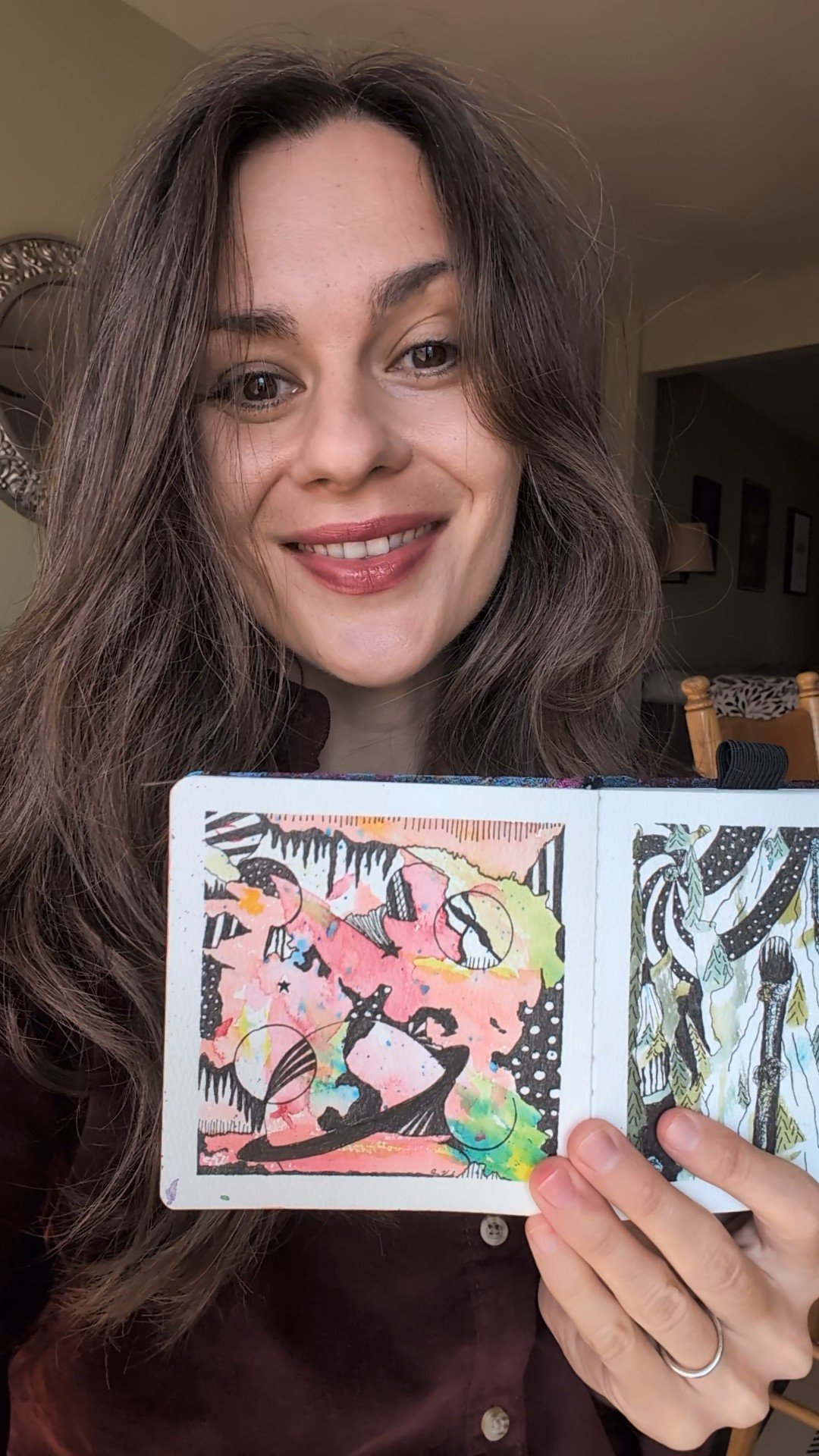
The first piece from my very own Chaos Series. Filling a tiny watercolor journal full of unfiltered creative expression was that best thing I’ve ever done for myself.
PRESENCE - ART FOR THE BODY
Let's start with the physical. They say that grief is love with nowhere to go. Along those same lines, I think suffering is pain with nowhere to go. When we are hurting in the worst kinds of ways and unable to release that hurt—either because it's beyond words or a chronic occurrence from which there is no escape—that pain stays trapped in the body. To keep it together, we contract, hold our breath, or brace for impact. This creates a weight that trails like a shadow, diminishing what is left of the lives we do have. Art, in my mind, is first and foremost a physical outlet. To unpack that, let's look at the physical mechanics involved, why they matter, and one of my go-to exercises for channeling that energy.
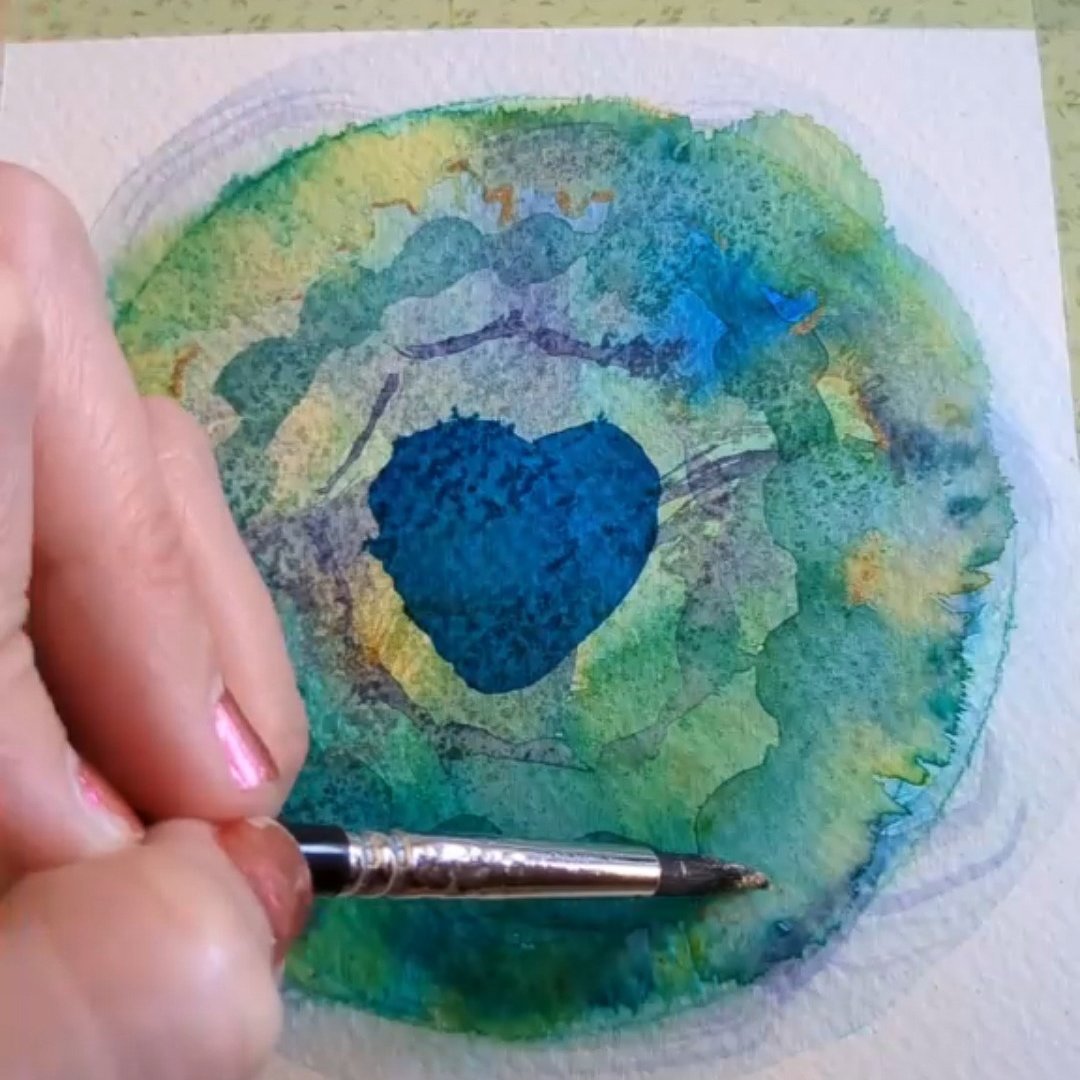
A mini mandala painting to get into a rhythmic flow.
When people think of painting, they usually think of the disembodied outcome, the picture. But painting is an action, an ongoing one at that. It's not just making color appear on a canvas. It's the pouring of the water, mixing of the paint, lifting of the brush and gliding it across the white space. Those, of course, are all specific movements that the canvas keeps a record of. But, to really let what's inside flow requires breath. It is the backbone of all those movements and at the heart of any creative act. Suddenly, your series of disconnected movements becomes one fluid inhale and one fluid exhale. This fluid breathing connected to movement creates a sense of presence. That presence, in turn, creates an outlet from your internal center to the external world.
One of my favorite art exercises for facilitating fluid movement through breath is this color arcs exercise (video link below). I know in the provided video/image they look like rainbows, but they don't have to involve every color.
The concept of this exercise is very simple. The following is a quick breakdown:
Gather the materials. This step helps quiet my mind; it prompts me to engage with the sensory details of each item, which is more effective than actively trying to disengage from my own ruminations.
Settle in. I like to take a moment to account for my space before I begin. Am I comfortable? Is everything easily accessible?
Step up. This is firing up the engine, so to speak. I'll spritz my pigments, wet the brush and choose a color. Any color.
Inhale. I load the brush with color and sweep it upward along the paper to create the first half of the arc, inhaling all the way.
Exhale. I sweep my brush downward to finish the arc and clean my brush, exhaling all the way.
Flow. I repeat the inhale/exhale process, varying the colors and sizes intuitively and stop when it feels done.
The outcome in my body is a sense of presence and a reminder of what it feels like to be calm and centered. It's a flashcard of a feeling that I train on regularly. Then in high stress, painful, or devastating situations, I can tap into that practiced feeling and act from a place of personal agency rather than simply react to external overwhelm.
RELEASE - ART FROM THE HEART
Once anchored in our bodies, we can more easily access the emotions we’ve been holding onto. Sadness, anger, shame, disappointment, loneliness, and fear are uncomfortable to sit in, but they’re an unavoidable part of life. If we stuff those feelings down and refuse to process them in a healthy way, they start to pile up and cloud our vision in spite of our best efforts to turn a blind eye. They must be seen and processed. To stop their flow is akin to holding your breath indefinitely.
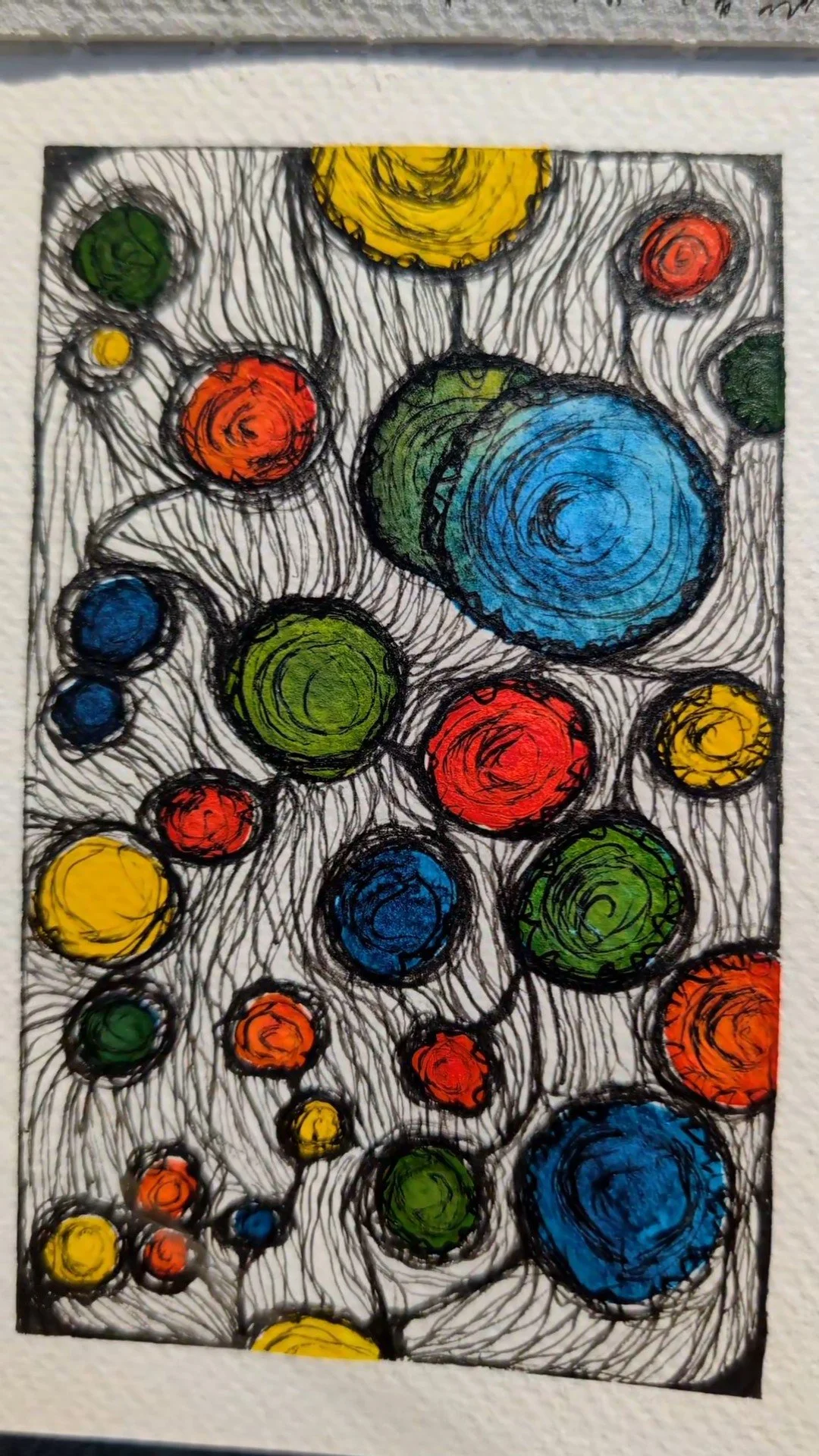
A small neurographic art piece to help the daily flood of thoughts and emotions find new pathways.
But, processing emotion is tricky. It presents the same dilemma as words. The instinct is to explain.
With painting, the explanation might appear as a single watercolor teardrop, like saying ‘I’m sad.’ But if your experience is more complex, this is rarely enough to release it fully. Or on the other end (which I tend to operate in) you explode your feelings all over the canvas and just end up with a senseless mess to clean up. Whether you chose to make your mark with stubborn paint splatter or a litany of profanities, no weight has been lifted. I've had to learn the hard way that before I can explain my experience, I need to understand it. That requires listening. Personally, I like to turn to intuitive painting for this kind of work.
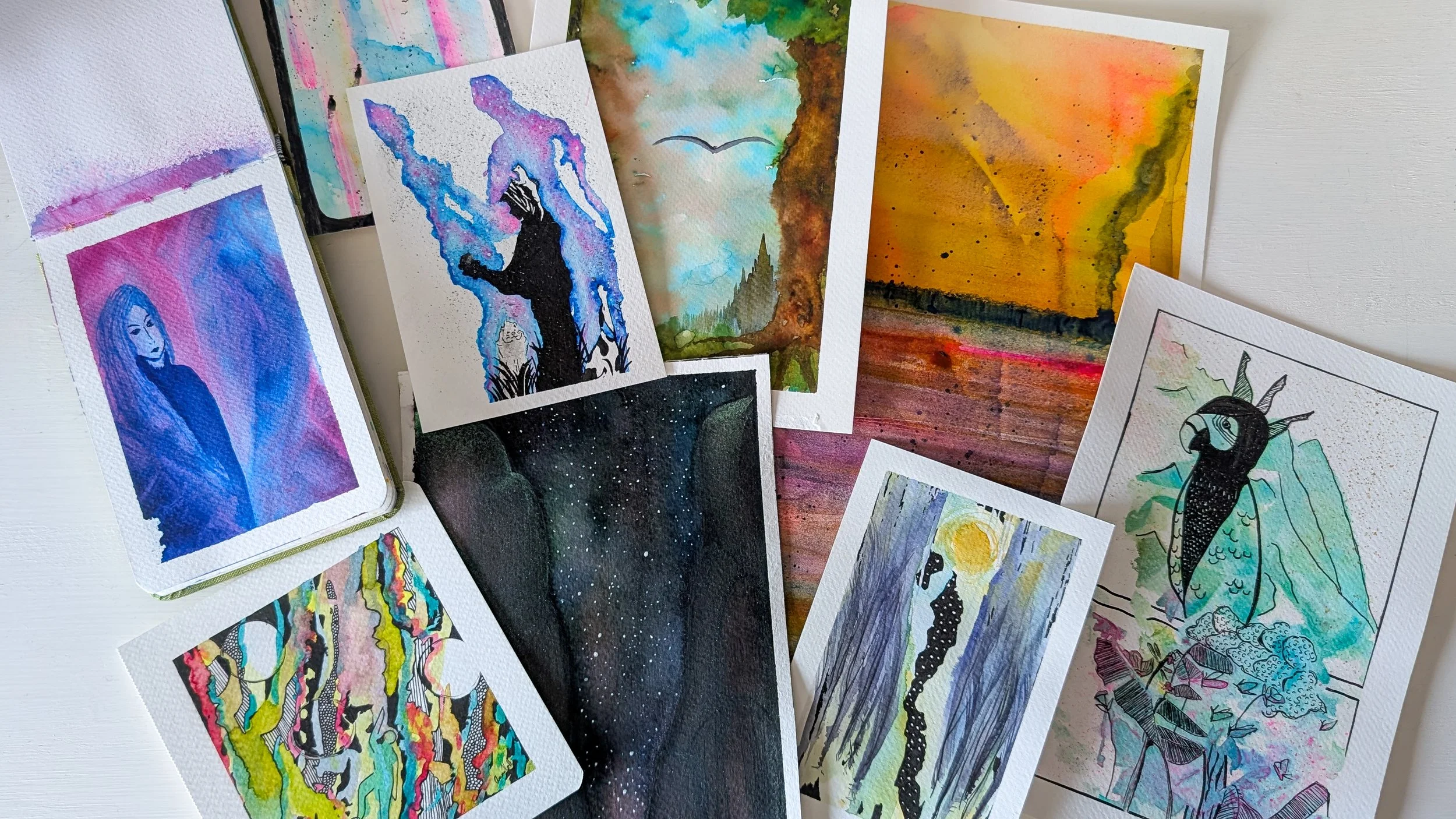
A handful of intuitive paintings and mixed media pieces I’ve created over the years.
Intuitive painting is essentially painting without pretense. It releases the mental expectation of how your felt experience should look on paper. I love intuitive painting, because it's a gentle process. It starts with establishing presence in the body, as previously discussed, and then takes it a step further by encouraging me to listen to that small voice inside. While my raging emotions rattle in their cages and my mind riles them up, my intuition quietly sidesteps all that and unlocks the heart of the matter.
To facilitate an intuitive painting session for yourself, think of it like pulling threads. You're not creating a tapestry; you're unraveling one. The starter thread can be anything. It could be the color that catches your eye, a shape that comes to mind, or even a movement you feel like making. Pull that thread for a little while then pause. Pick another thread. What does this piece need now? Keep pulling threads until you're done. The video below walks you through the process.
Usually it's not until after I've completed an intuitive painting that I understand what I've been carrying around or what I was trying to do. And the results vary day by day. Sometimes (like in the video above) I’m just painting a soothing scene that’s deeply relaxing. Sometimes the result is heavy. And sometimes it’s a joyful burst. By simply creating with the elements that speak to you, you can release the narrative burden and allow your feelings to surface at a manageable pace.
RECLAMATION - ART OF THE MIND
And finally, this brings us to art of the mind. When creating art specifically to facilitate self-healing, my mind is the last stop. My physical body and emotional body need to feel secure before I can trust my own logic not to simply justify my own fears. But once I reach that secure place, that's when making art turns into making meaning. It's a powerful point where you can reclaim your own narrative and start telling your true story.
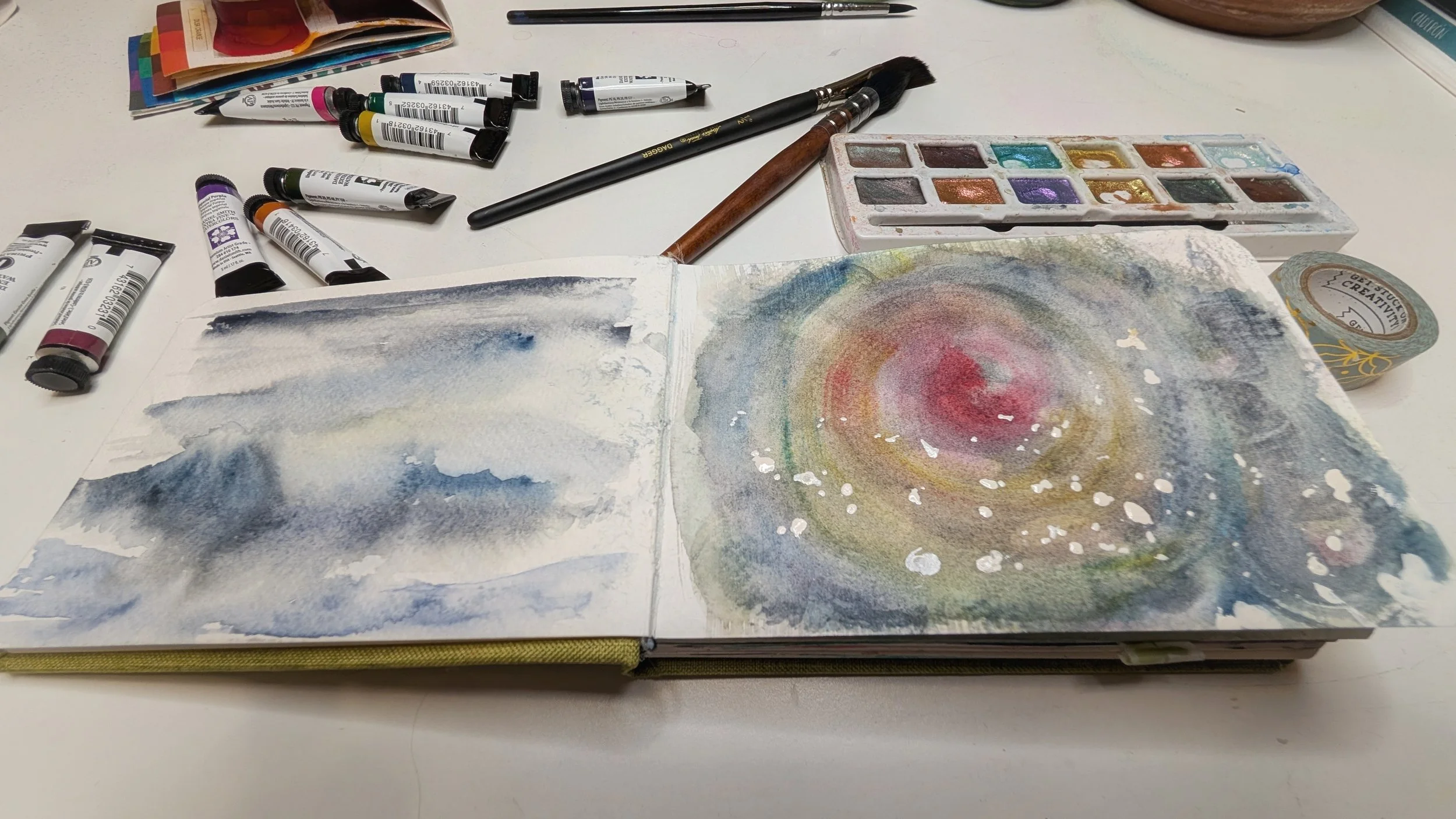
The creative wreckage of trying too hard.
But be aware, because art from the mind is more intentional, it can also be a double-edged sword. It's easy to get lost in making things look perfect while telling your truth. There have been times I've had a very clear image of my experience in mind, but I couldn't translate it onto the canvas exactly as planned. The attempt suddenly became a point of frustration (see photo above). In an effort to control the aesthetic I constricted my ability to make meaning freely.
This isn't always the case. However, when I find myself getting distracted by my own perfectionism, I turn to collage. Collage making is a beautiful art unto itself. And if you're not familiar, it’s basically finding, assembling, and gluing different materials together to create a piece of art. It's storyboarding in the most literal sense. To get you started with the basics, I’ve linked a mixed media collage tutorial below.
But for today’s blog post, I’d also like to include a collage exercise that I find to be very grounding in challenging times. It's an internal self-portrait exercise. The goal is to acknowledge who you are and where you are right now.
The internal self-portrait exercise is as follows:
Gather. Collect your materials (magazines, old calendars, scissors, glue, paper) and set the tone with music.
Choose. Scan your materials and cut out the images that resonate with you. The self-portrait doesn’t have to be literal.
Assemble. Play with your pieces, mix them up, glue them together, arrange them on your paper until you see yourself emerge.
Affirm. Glue your pieces to the paper. This is now a personal statement.
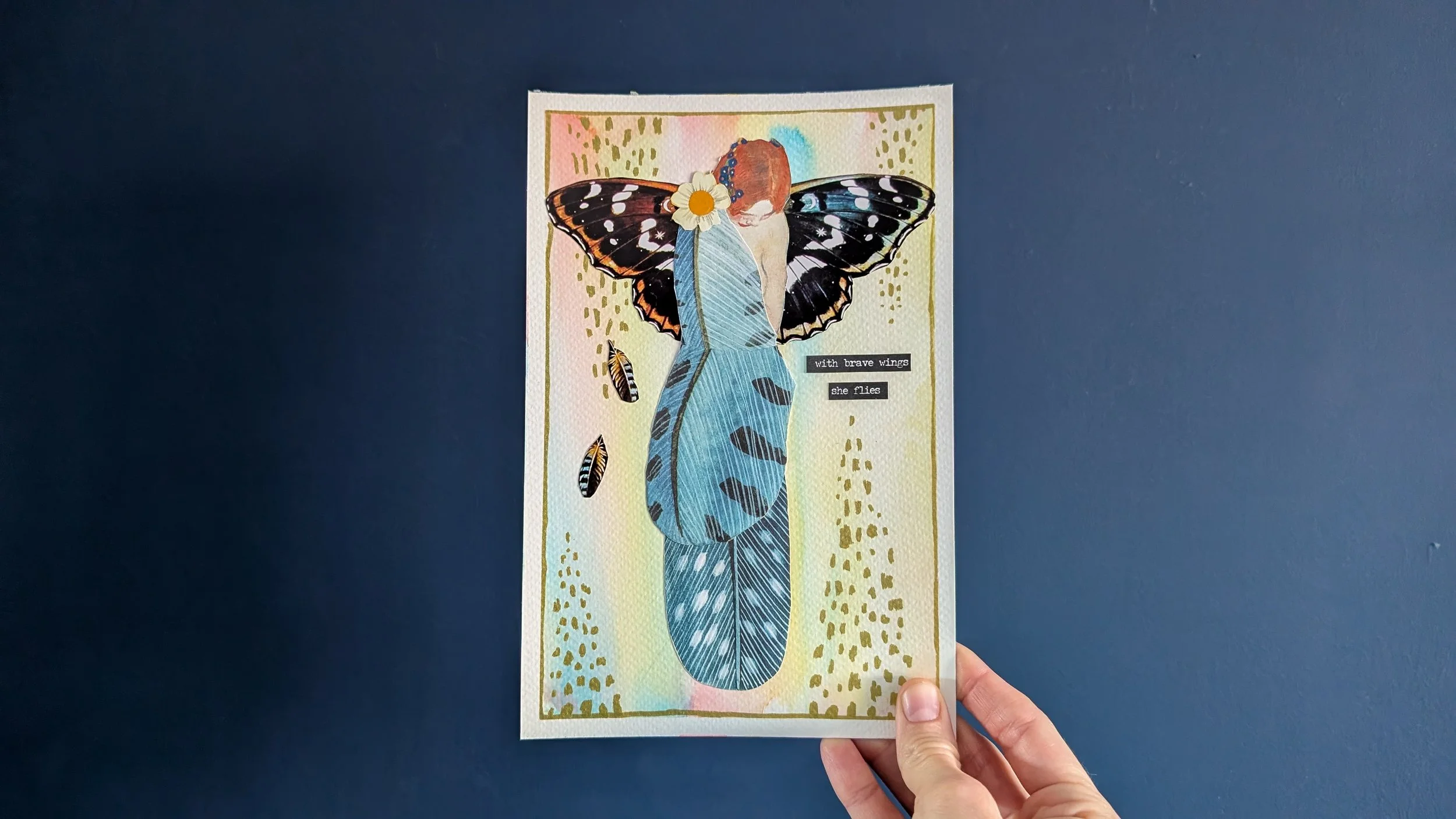
A collage I created at a time when I needed to gather my courage. It represented my story in that moment and who I decided to be within it.
The end result for me is usually a sense of peace. It's not because suddenly the circumstances now seem so much brighter (far from it), but it helps restore that sense of identity. And that sense of identity can help inform your next steps based on your truth and values. You take back your agency.
YOU ARE THE MEDICINE
In his book The Body Keeps the Score, the renowned trauma expert Bessel van der Kolk, M.D. writes, “…our capacity to destroy one another is matched by the capacity to heal one another.” Our collective history makes it clear just how destructive human beings can be. But that’s not the whole story.
For me, art is like putting on the oxygen mask while the plane is going down. It doesn’t stop the crash. But it brings me back into my body. It keeps me conscious. From that place, I can listen, choose, and act with intention and integrity — shaping what happens next for myself and for others.
Through this practice we can discover the voice beyond words and live by it. That is the medicine.