
Sad Song Society: How Your Playlist Can Shape Your Art
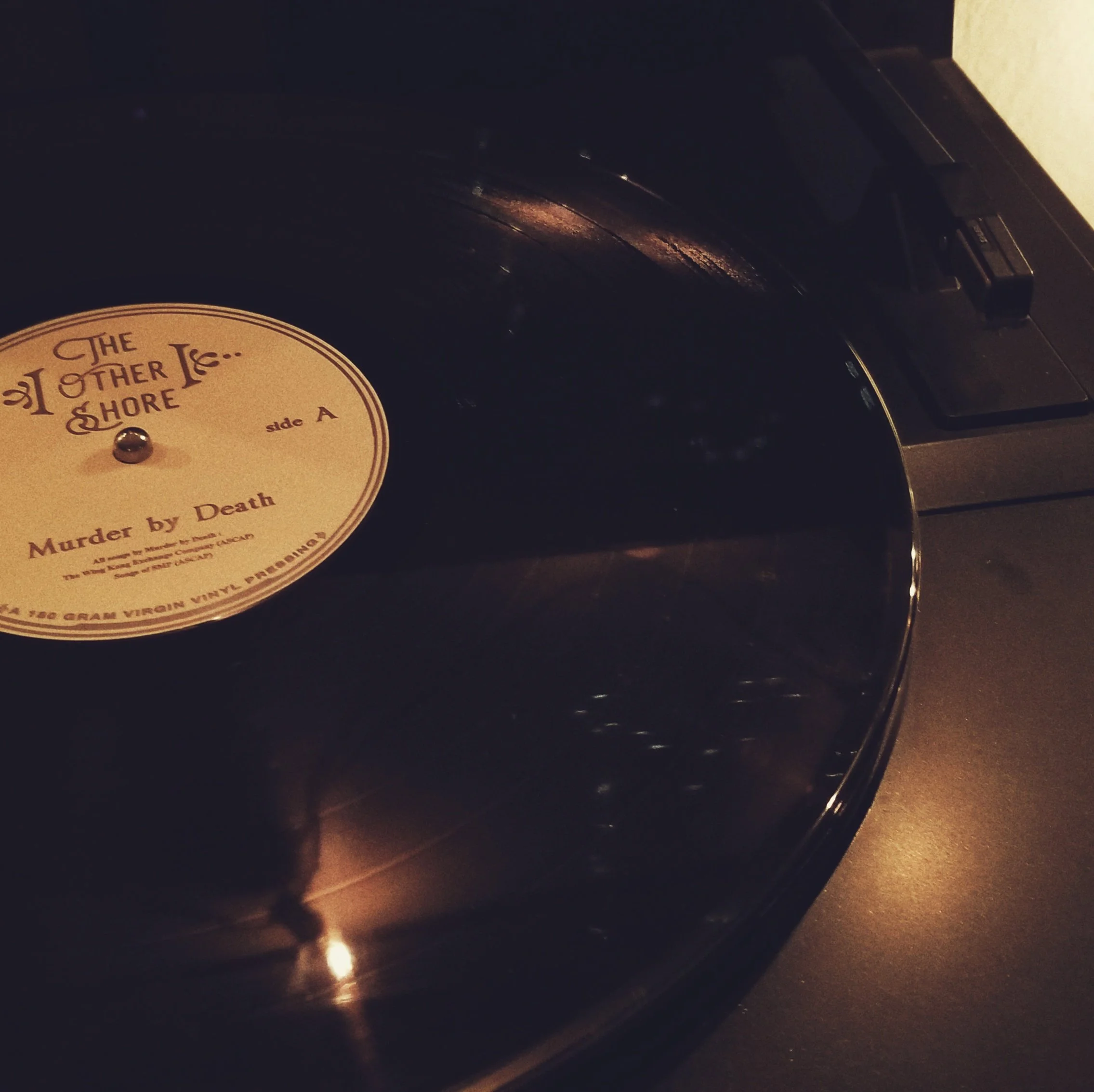
Murder by Death's space western album The Other Shore. Brilliance on vinyl. A tragic inspiration.
Rainy morning. Black coffee. Sad songs. That trifecta will always have my heart. For the longest time I didn't understand why. And you yourself may be wondering why it's even a topic of discussion for an art blog. Fair enough.
It's really the sad songs I want to examine today. Not in a navel-gazing type of way, but in one that recognizes the artistic inspiration and grounded support to be found in tragic tunes.
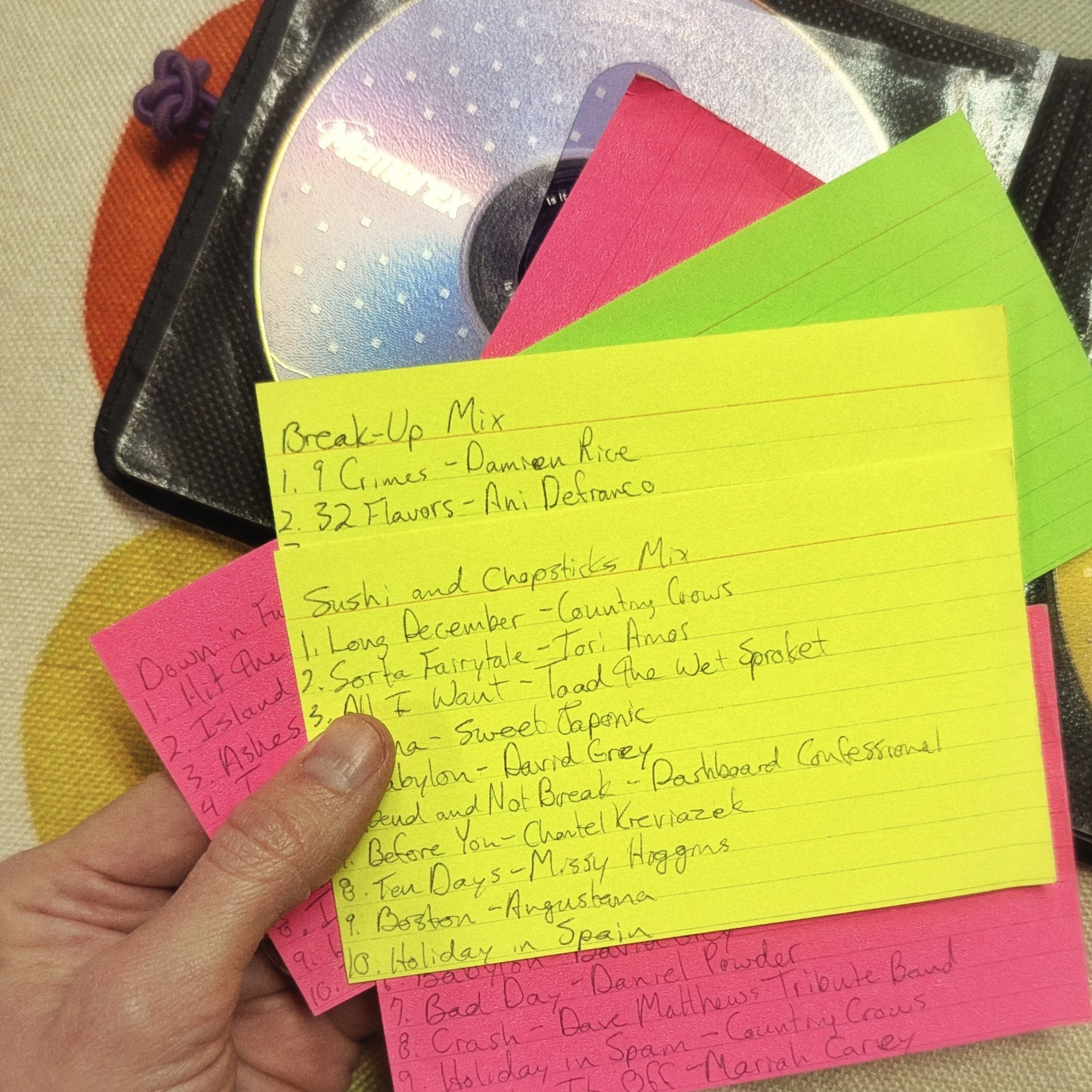
A smattering of early 2000s mixed CD playlists on stylish neon index cards. Proof that this obsession with sad songs has been ongoing for some time, not that you needed any.
Have you ever heard of the term tragedy paradox? It's basically the pleasure derived from witnessing fictional suffering, as seen in art, music, theater, and writing. In researching my own experience, I came across a Psychology Today article that explains the entire phenomenon. It goes over how our basic human biology (mainly prolactin, the consoling chemical) along with individual neuro-mapping (specifically related to empathy levels) affect our personal experience with sad music. It's a quick, fascinating read.* It also reassured me that I'm not that weird and, upon further reflection, that my choices in music actually serve an important purpose in my art-making.
So, today, I'd like to share a few ways that I use music to shape my art. And if you prefer upbeat music or angry music or some other variety—stick with me. Understanding the type of music you gravitate toward in your creative practice can help you realize your needs, process, and goals as an artist. And just like your musical tastes, your creative framework may shift over time. There are 5 main ways that I use playlists to fuel my art, and you can too. Let's take a look!
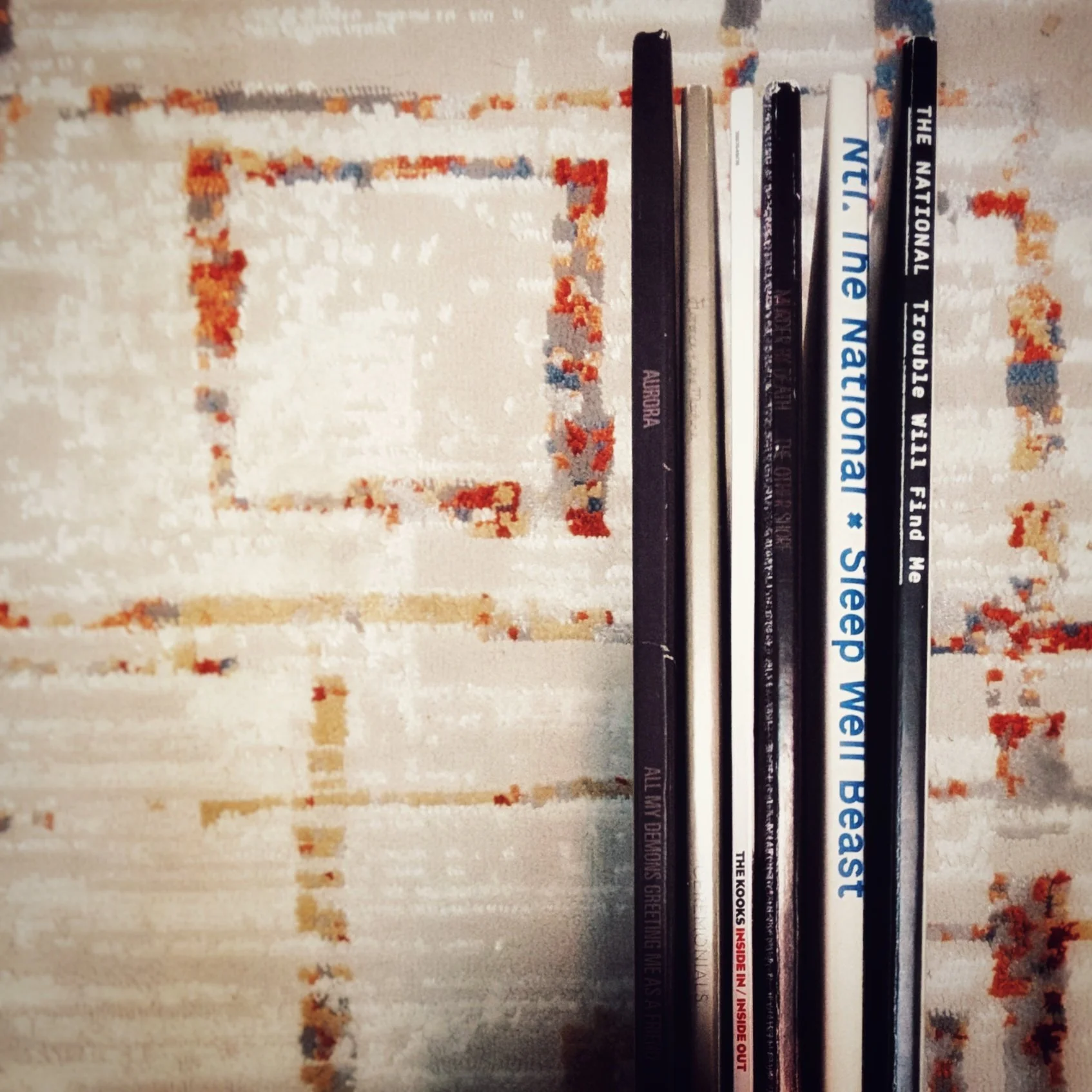
A few of my favorite records with go-to angsty and melancholy ballads.
RHYTHM
The most obvious way music can support your art practice is in helping you find your flow. The reason I turn to sad music most of the time is because it typically feels the most steady to me. And if you have a mind like mine that constantly races 90 mph, that type of rhythm is essential for grounding. With the right song, there's an odd sort of calm that settles into my body. Suddenly, I can concentrate. Painting becomes an active meditation. I often listen to sad music even when I'm painting something that comes from a neutral or joyful place because it keeps me on track in a way that "I Love You Always Forever" by Donna Lewis simply cannot. Lately, I've had Florence + the Machine's song "Buckle" looping in my head. The song's measured yet driving rhythm is responsible for me completing many recent projects.
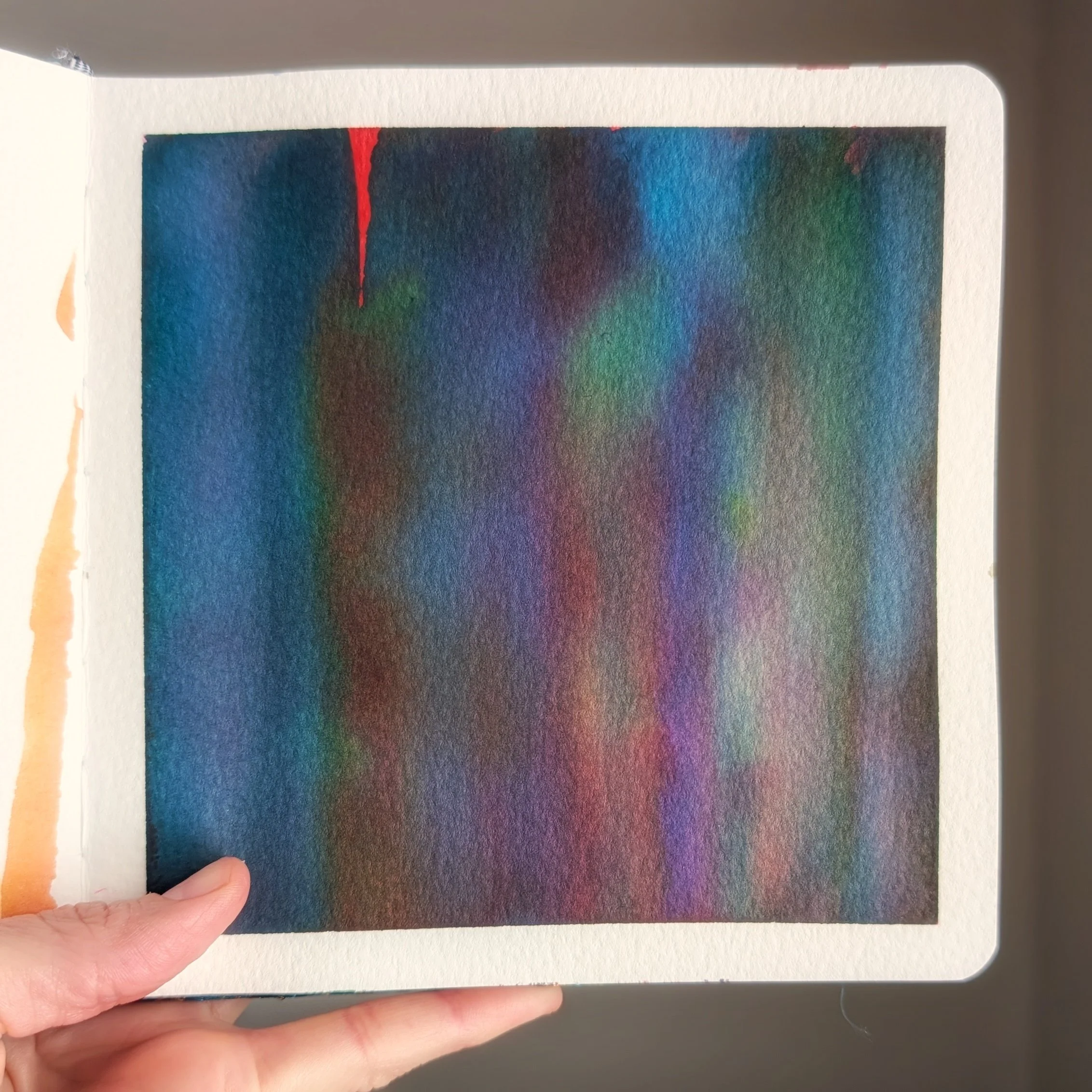
Painting this piece was a blur, because the music just kept pushing things forward until it was done.
NARRATIVE INSPIRATION
Music also provides a banquet of narrative inspiration, but not necessarily in a direct way. I think one of the most interesting things about interviews with musicians is how often they're pressed to reveal some strictly autobiographical experience as the source material for a song. And while personal experience is likely involved, most creations are more like Frankenstein's monster: an amalgamation of experience, perception, witnessing, and circumstance. The same goes for visual art. That's why I often turn to songs to listen for bits of lyrics that resonate for some reason or another. For example, the artwork in the photo below was inspired by the following lyrics from Billie Eilish's "Ocean Eyes":
Careful creature made friends with time
He left her lonely with a diamond mind
And those ocean eyes
The barren little spacescape below is a witnessing of the loneliness depicted in the song entangled with my own experience. I also misheard the lyrics and instead of "diamond mind" I heard "diamond mine". That sent me down a rabbit hole of imagining this woman abandoned in space with a diamond mine. Rich beyond compare, yet fated to spend eternity staring into the starry ocean eyes of space in search of companionship. I told you, Frankenstein's monster. A little music goes a long way.
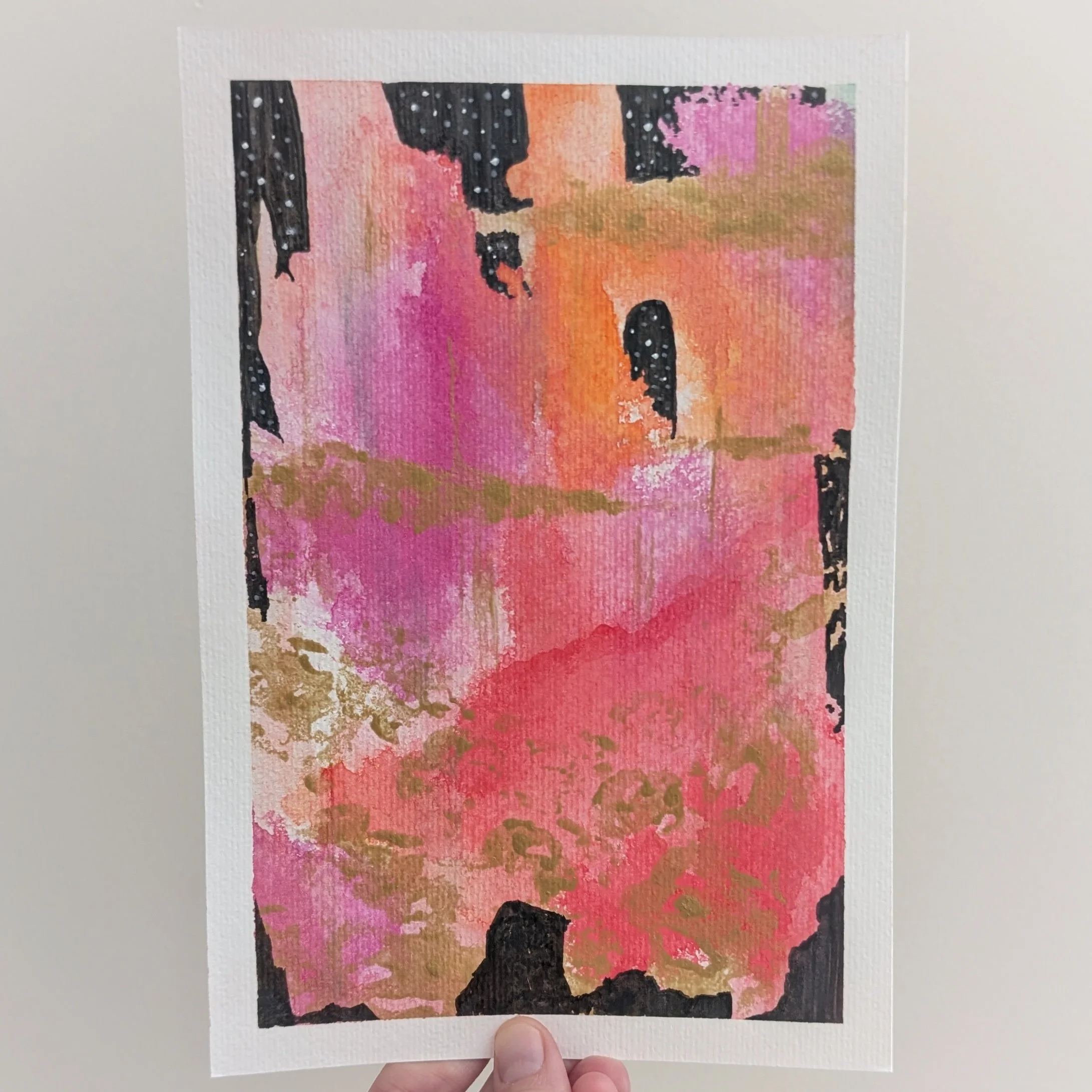
I feel like this would be a good jumping off point for a series of sad fairytale paintings.
MOOD
In contrast to its inspirational powers, music can also help solidify an existing mood. For example, a lot of times I've already been inspired by a particular color palette or set of shapes. I don't know where it comes from. Probably the primordial creative melting pot of my subconscious or, you know, a greeting card. Regardless, to help me hold onto that mood, I reach for music that fortifies the vibe. The photo below is a recent watercolor and acrylic piece I painted. I really wanted to use a dark, brooding palette with an assortment of abstract shapes. The German dark jazz band, Bohren & der Club of Gore matched the mood perfectly for this painting session, specifically the song "Constant Fear".
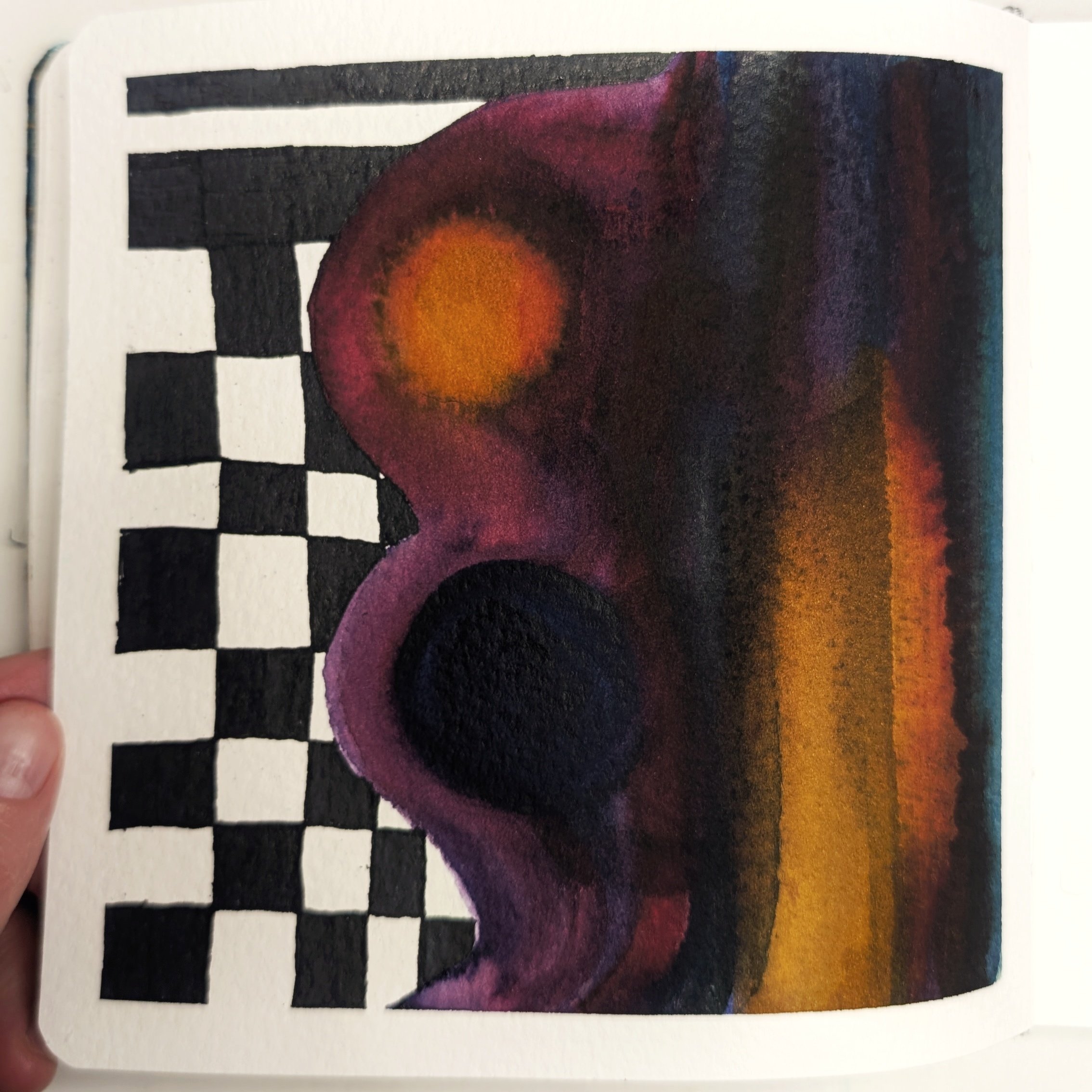
I’m not sure what to call this. Surreal noir?
COMPOSITION
But music isn't solely about creating vibes. I've also found that it can be a wonderful teacher for experimenting with technical execution. There are some tracks where I'm not just listening--I'm studying. I'll note the effects of instrumental layering or breaks in sound and translate that visually to get a similar effect for my own purposes. For example, in the piece below, I tried to recreate the very gradual and tender layering of instrumentals and vocals from the song "Nobody Else Will Be There" by The National. It dawned on me that since I work primarily with watercolor, delicate, soft tracks tend to best support the skills I'm currently trying to hone. Light bulb!
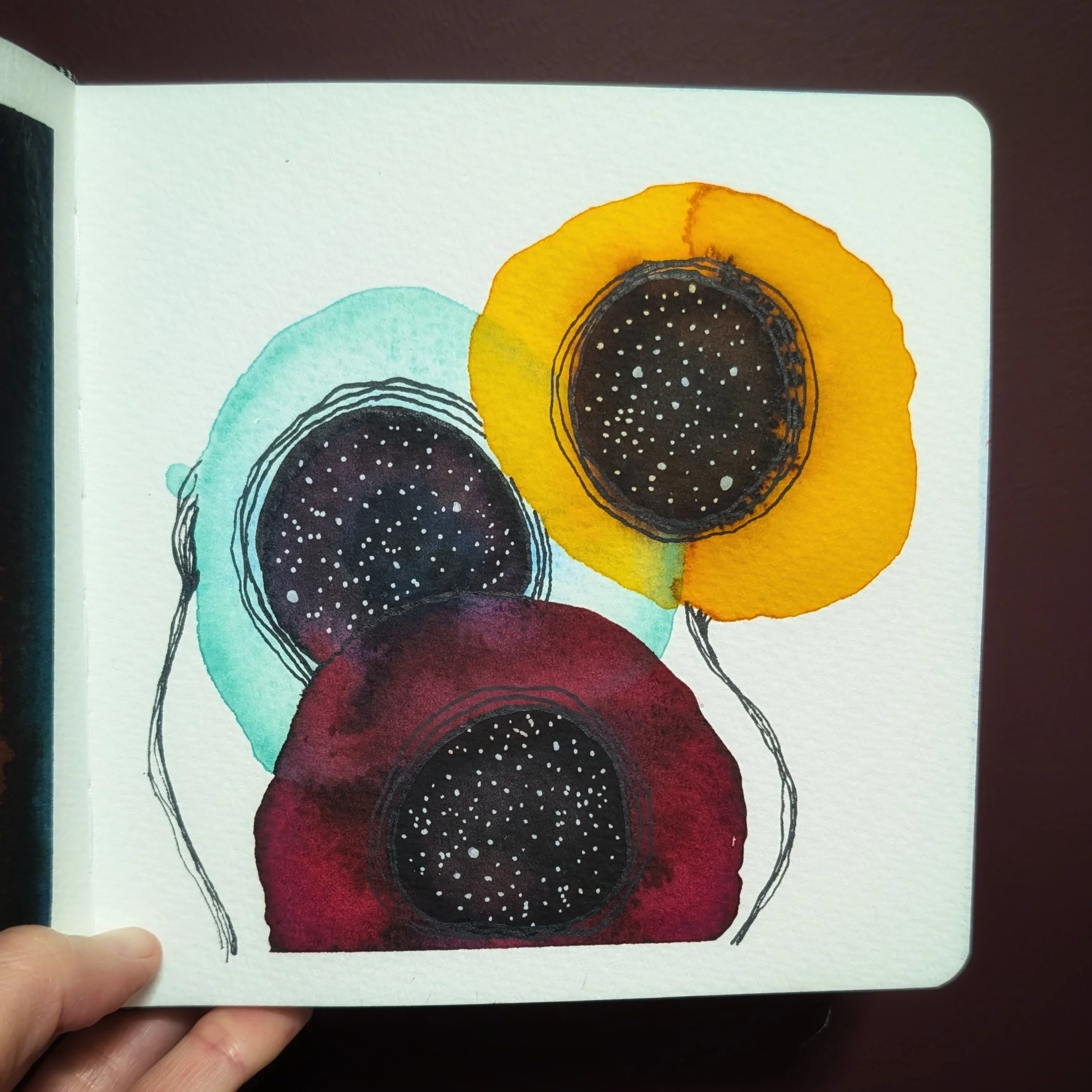
Honing those glazing and delicate penwork skills!
COHESION
And finally, this brings us to cohesion. How do you put all that pacing, inspiration, mood, and technique together? I've often asked myself this question while working on various art series. Each painting in the series is like a track on an album. Naturally, if I'm stuck, I end up perusing my record and CD collection for examples on how to tie different motifs and themes together. And as I listen to the music, trace my fingers over the album art, and read through the lyrics, I get a sense of the kind of journey I'm being taken on. That helps me contemplate the kind of journey I want to captain for the people viewing my creations. The photo below is Murder by Death's album jacket forThe Other Shore. It has its own pop-up planet! Such a cool way to bring the viewer into the experience.
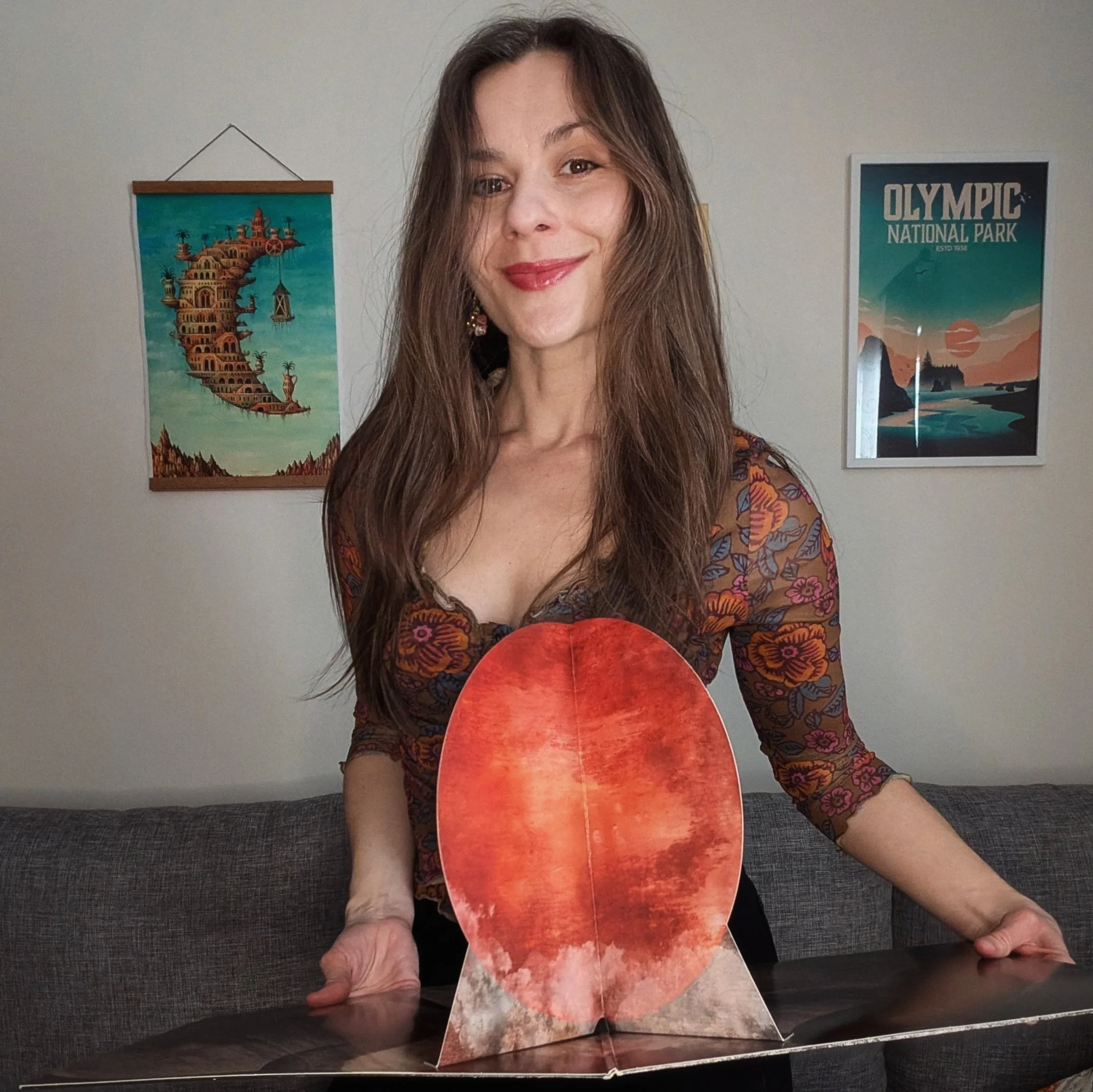
The pleasures of interactive album art. :)
So, those are the primary ways I lean on music to push my own visual art forward. And to be clear, I don't constantly think about all these different dynamics while I'm painting, that would be maddening. However, if I need to ground myself to focus, find inspiration, or figure out how to finish what I’ve started, I reach for sad songs. Consequently, I have multiple playlists that could serve as ready-made soundtracks for any number of modern-day Shakespearian tragedy reboots. PBS, call me!
What about you? What kind of music fuels your creativity?
Comment below! Or, if this resonates with your creative process, I’d love for you to share it with a fellow artist. Thanks for reading!
*Link to Psychology Today article:
"The Tragedy Paradox: Why We Like Sad Music" by Barbara Blatchley Ph.D.
https://www.psychologytoday.com/us/blog/what-are-the-chances/202211/the-tragedy-paradox-why-we-sad-music